
On Winning the Lottery.

I sometimes wonder what I would do if I suddenly won the lottery, not in the frantic, daydreaming way people often imagine, but in a quieter, more interior sense.  What would it reveal about me?  What would it change, and what would it leave untouched?

The answer, I’ve realized, depends less on the amount and more on the person receiving it.  A small windfall would be a pleasant gift for my husband, perhaps a chance to take a trip I’ve dreamed about for years.  But a larger sum such as hundreds of thousands, even millions, in fact, invites deeper reflection.  It asks who I am beneath the surface of daily routines and practical decisions.

If such a blessing ever came my way, my first instinct would be to give.  I would write a check to my parish, trusting that the funds would be used where the need is greatest.  I would finally visit the old country, reconnecting with my family there, and eventually stepping into the pilgrimage sites that shaped my imagination long before adulthood did.  I would sell my current home and settle into a condominium in a quieter corner of the state, close to a traditional Catholic parish where the Latin Mass still rises like the beautifully fragrant incense from another century.

But beyond those changes, I know myself well enough to see what would remain the same.  Wealth would not tempt me into reinvention.  I wouldn’t adopt a grand accent or cultivate airs.  I wouldn’t trade smoked chubbs or oxtails for some curated, fashionable palate.  I wouldn’t suddenly require a staff to manage my life.  I would keep my one car until it sighed its last breath.  I would continue wearing the clothes I already own, cooking the meals I already enjoy, and living with the same simplicity that has always grounded me.  The only indulgence I’d allow is hiring painters for the new place—because some chores lose their charm with age.  I’ve done enough painting and redecorating in my life.

Reflecting on this, I see that my imagined choices with lottery money mirror the choices I already make with my current income.  In fact, our relationship with money is rarely transformed by the number of zeros in our bank account.  Instead, it reveals itself in how we think, what we value, and what we believe we need to feel whole.

Financial psychologists speak of “money personalities”—the Spender, the Skeptic, the Saver-Investor.  These categories are not cages; they are mirrors.  They reflect the habits shaped by our upbringing, our culture, our mistakes, and our growth.  And like all aspects of the self, they can evolve.  A windfall might awaken generosity, anxiety, or discipline.  It might even amplify who we already are or nudge us toward who we hope to become.

In the end, imagining a lottery win is less about money and more about character.  It invites us to ask what we truly desire, what we fear, and what we believe will bring us peace.  For me, the answer is surprisingly simple:  I don’t need more “things.”  I need meaning, connection, beauty, sacrifice, and faith.  And those, thankfully, are not purchased with winnings but cultivated in the quiet choices of my everyday life.

Winning the lottery isn’t reality, but it is a little fun to banter about what I would do with an amount of money I can’t comprehend.  No harm in having some fun with the idea, though.


Wigged Out.

At dinner the other evening at the country club, we sat at a table at the back of the restaurant, nestled in a cozy alcove dimly lit by a warm, flickering candle in a glass votive.  Our wine glasses of glimmered in the low light.  The clinking of silverware and the soft hum of chatter filled the air, punctuated by bursts of laughter from a boisterous group near the bar.

Across from us, a couple sat at the immediate table opposite ours.  They immediately drew my attention with their striking contrast.  She was a petite, frail-looking woman, her presence almost ephemeral, yet undeniably elegant.  Her baggy, sequined blouse sparkled faintly under the muted light, a deep emerald green that complemented the intricate plastic pearls cascading down her neck.  Her white pants, cut high to mid-calf, were snug and showed off her caboose.  Every gesture of hers was deliberate, placing her napkin, adjusting her sleek clutch, moving her wine glass, as though she were orchestrating a performance of refinement.

Across from her sat the undeniable foil to her practiced image.  He was a large man, his frame spilling over the edges of the overstuffed dining chair.  His attire was an amusing affront to hers: a pair of sagging khaki shorts, socks with sandals, and a faded, nondescript polo shirt, the type that might have been gray once but had since resigned itself to a black, lavender, taupe ambiguity.  His bulbous nose was faintly red, matching the ruddiness of his face.

But the pièce de resistance became the highlight of the evening.   It was his hair.  His hair—or rather, what aspired to be his hair was . . .  “different.”  A Just for Men “Darkest Red Brown” masterpiece of a wig was perched atop his head, so incongruous with the rest of his appearance it felt like a punchline to a joke only he didn’t quite get.  The thick, wavy wig seemed precarious, as if it might slide off at the slightest provocation.  It sat too high, too perfect, too ruddy-brown and defying both gravity and reason.

He leaned back in his chair with an air of self-satisfaction, plucking at a breadstick while his lady friend sipped delicately from a wine glass.  They exchanged sporadic words, her responses curt and his booming laugh echoing through the restaurant, prompting raised eyebrows and glares from nearby diners.

They were a spectacle, a living contradiction, a joke, an editorial cartoon.  The woman seemed to be holding onto a bygone era of sophistication, while the man seemed content to bulldoze through it, unbothered by appearances or subtlety.  Yet, there was something oddly appealing about them with a mystery to unravel, a story hidden beneath the surface of their mismatched personas.


The Age of Adonis (Part 2)

Part 2 of 3:  The Quiet Virtues

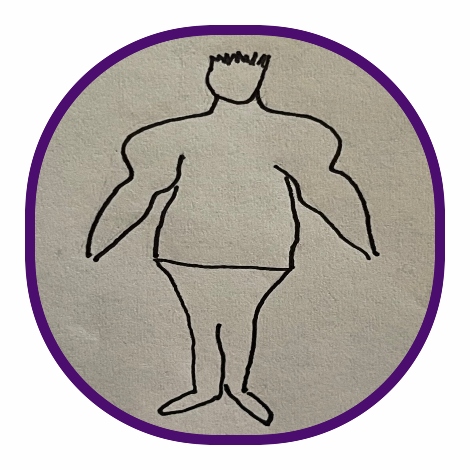
Not long after watching the rise of our neighborhood Adonis — the sweat, the swagger, the ever‑expanding circumference of his upper body — I began noticing something else in the building.  Something smaller, quieter, and far easier to overlook.

It started with the older gentleman on the fifth floor, the one who always carries a canvas tote bag and walks with a slight shuffle.  I once saw him pause in the lobby to hold the door for a mother wrangling a stroller and two grocery bags.  He didn’t say much. He just nodded, smiled, and waited until she was safely inside.  No flexing.  No performance.  Just a simple act of courtesy that didn’t require an audience.

Then there’s the woman down the hall who leaves small seasonal decorations on her door.  They aren’t elaborate, just a tiny flowery wreath or a quilted, hanging pumpkin door decoration.  She never announces them, never tries to impress anyone.  But somehow those little touches soften the whole hallway, as if she’s quietly reminding the rest of us that beauty doesn’t have to shout.

And of course, there’s the retired engineer who waters the courtyard plants when no one else remembers.  He doesn’t make speeches about community or stewardship.  He simply notices what needs doing and does it, his hands moving with the calm competence of someone who has spent a lifetime tending to things that grow slowly.

None of these people would ever call themselves virtuous.  They would laugh at the idea.  They are simply living their lives with a kind of unselfconscious decency that doesn’t demand or look for applause.

It struck me one afternoon, watching the engineer mist the begonias while Adonis strutted past, that quiet virtues are the ones that actually hold a place together.  Not the loud displays of strength or the curated personas, but the small, steady acts that ask for nothing in return.

The world has always had its Adonises; men who sculpt themselves into monuments and then wonder why no one bows.  But the world has also always had its quiet souls, the ones who keep the doors open, the plants alive, the hallways gentle.

And if I’m honest, it’s the quiet ones who make a neighborhood livable.  They are the ballast, the steadying weight, the reminder that goodness doesn’t need to be dramatic nor a showboat to be real.

In a culture obsessed with spectacle, the quiet virtues are almost radical these days.  They whisper instead of shout.  They build instead of pose.  They endure long after the muscles deflate and the spotlight moves on.

And perhaps that is the real miracle: that in a world full of noise, the softest lives are often the ones that speak the truth most clearly.

Part 3 will be published on April 18, 2026.

Live Well and Worthily.

Life is short, and it is meant to be lived well.  Wouldn’t you rather pour your energy into living it with virtue, steadiness, and joy than spend your days wrestling with every distraction that tries to muddle it?

Life is much too short to . . .

. . . waste time.

. . . not read the Bible.

. . . read tasteless books/magazines.

. . . be subjected to vulgar language.

. . . be exposed to disparaging gossip.

. . . argue with strangers on the Internet.

. . . be around people with no sense of humor.

. . . be around combative and negative people.

. . . watch a program that turns out to be vapid.

. . . listen to the “news” when there isn’t any news.

. . . not crack open a book written by or about a saint.

. . . be entertained by raunchy “entertainers” and “artists.”

. . . put up with the rat-a-tat-tat of unimportant intrusions.

Life— wouldn’t you rather live it well and virtuous than fight what’s interfering with it?


The Age of Performed Identity.

How much of our lives have we spent trying to be something—or someone—we’re not?  It is one thing to pursue growth, to refine our character, and to enrich our inner life, yet it is quite another to adopt a false identity for the sake of impressing others, whether for money, status, or the fleeting approval of strangers, family, and acquaintances.

Lately, it seems that the art of pretending has become a widespread habit, a kind of cultural contagion.  Over the past decade especially, I’ve watched this phenomenon snowball.  It has become easier and fiendishly tempting to put on a polished façade while abandoning genuineness, humility, and empathy.  Social media, with its curated illusions and endless opportunities for self‑promotion and keyboard commandos, has been the chief purveyor of these false faces.

And how easy it is.

In a world moving at swift speed, the pressure to perform seems to be ceaseless.  Some people feel compelled to reinvent themselves for every audience, to appear more educated, more virtuous, more high class, more enlightened than they truly are.  Some people, unfortunately, strain to become the moral authority in every conversation, to project wisdom they have not earned, and to cloak their insecurity in a thin veil of false humility.  Some people invent and re-invent their live story continuously.

It must be exhausting.  From my vantage point, watching someone puff himself up by preaching from an imaginary pulpit, presenting himself as all‑knowing while sprinkling in counterfeit modesty, or looking down their nose at others, is a disheartening sight.  There is nothing admirable in self‑inflation or pretend self-deflation.  It does not elevate a person; it exposes him.  False humility serves only the ego.  It leaves no room to serve God, despite all their claims of “thanking God everyday” for such-and-such.  It comes across Pharisee-like when you know their true history and that they are putting on a public show.

Putting on an act for selfish gain is, at its core, a fabrication of the truth.  Duplicity demands constant maintenance, and after a while, there is so much maintenance that fabrication becomes sloppier and sloppier.  One must remember every false detail with perfect precision just to keep the fiction intact, and that’s the hard labor one has to do for a hollow reward in the prison of their mind’s fantasy.

It is far better to remember that the one thing you can do better than anyone else is to be yourself.  Of course, one could make the argument that being phony for some people is “being themselves.  Yet there is less work and stress to admit one’s true self and not make up stories to impress an audience.  Or in one case, I have seen one person who has shared his childhood as first “middle class,” then defined it as “not quite middle class,” to the sad Dickensian tale of “being poor.”  Is that the “fake it until you make it” mantra at work, or the pretend “rags to riches” story?  I won’t bother to hazard a guess.  All I can say is I have little regard for counterfeits.

The world does not need more people parroting platitudes or mimicking the latest persona.  It needs more of the original, the sincere, the unvarnished.  Pretending to be someone else is not only dishonest because it is truly a quiet betrayal of your own dignity.

As we step into another day, we should do so with sober eyes and clear hearts.  Remember who you really are beneath the noise and the pressure, and do not compromise that reality.  Be honest, be considerate, and be grounded in your principles.  Respect yourself and extend that respect to others.


Losing It with Quiet Discipline.

I have long known that the most reliable way to lose weight is also the least glamorous: change the way I eat, and do it without powders, liquids, pills, or any of the other gimmicks that promise transformation without effort.  They don’t work.  Real change comes from willpower, ordinary food, and an honest attitude.  These matter more than any trend.

This year, my efforts began even before Lent arrived.  A goal of losing eight pounds is losing eight pounds for more energy and just feeling better overall.  As January unfolded, I found myself preparing not only my interior life but also my habits.  I started cutting down on unnecessary snacking that crept in after supper.  Sure, I still indulged in a snack here and there, but it wasn’t gorging myself.  I continued my quiet campaign against corn syrup and the sugary additives that hide in so many foods.  And I returned to simpler cooking—meals that didn’t need to resemble anything from a fancy restaurant menu.  I proved to myself that I can cook anything well, so why do it every day?  That should be saved for special occasions.  Then I returned to meals that I grew up on that nourished rather than entertained.  There was a certain relief in that simplicity.

By the time Ash Wednesday arrived in mid‑February, I wasn’t scrambling to begin anything new.  I was simply continuing what had already taken root and ramping it up a bit.  The weight began to come off, slowly and steadily, and it still does.  But more importantly, the discipline of eating differently began to shape the discipline of living differently.

Attitude is half the work.  I stopped letting the noise of the secular world dictate my mood or my focus.  I ignored the foolishness that swirl around in headlines and conversations.  Instead, I turned my attention toward things that actually strengthen the soul: spiritual reading that lifts and edifies the mind and praying the Rosary with attentive meditation rather than mindless haste.  These practices didn’t just support my physical goals—they steadied my interior life.

There is a quiet joy in sacrifice when it is chosen freely and offered with purpose.  Lent simply gave me the structure to continue what had already begun: a return to simplicity, a clearer mind, and a heart more anchored in God than in the world’s distractions.

In the end, this has reminded me that caring for the body and caring for the soul are not competing tasks but parallel ones.  The more I simplified my meals, the more I found myself craving a simpler interior life as well — one less cluttered by noise, distraction, and the endless commentary of the world.  Lent simply gave shape to what I already sensed: that discipline is not a burden but a quiet form of freedom, and that small, steady acts of intention at the table and in prayer can reshape a life from the inside out.


Fusty Skunk, Rotting Fish.

When I lived at the Sage Pointe Condominiums, I never knew which putrid odor would ambush my unsuspecting nose when I opened my door to the hallway or when I stepped on or off the elevator.

The hallway had its own olfactory roulette wheel.  Some days the marijuana smelled like musky, gassy skunk.  Other days it hit like rotting fish drenched in pungent patchouli.  Sometimes it was a perfect blend of old, fusty socks and rank elephant.  Sometimes it smelled of eucalyptus.  Add to that the lingering smell of cheap cologne and cigarettes, greasy sausage, and those scents stayed for hours, only to fade and make room for the next dreadful strain of stench.

One of the building’s finest “amenities” was the elevator, which faithfully preserved the perfume of whoever rode it last.  I have taken rides perfumed by Grandma Weede’s lingering skunky marijuana haze from an hour earlier.  On other days, the odor du jour was a baffling mix of candy‑sweet pre‑teen bath and body sprays and lotions from the Stankle girls.  It was a combination that somehow managed to get stronger the farther down you travelled on the elevator car.

Mrs. Stankle, on her own, specialized in mysterious stenches that defied classification.  Some days it was sugary carrots, and other days it was akin to coconut-musk that went terribly wrong.  And sometimes it was something so indescribable that the only reasonable response was to pray for deliverance.

Adonis was no different.  If he didn’t just return from the gym dripping with smelly sweat, he reeked of a potent blend of sweat and Drakkar Noir, a combination that could have knocked a grown adult back a full step or two.  His life is lived in bold, glossy strokes of sweat, swagger, and spectacle.

Then there’s the Weede Family, whose contributions varied by the hour.  Their hallway offerings ranged from “forest‑floor funk” to “burnt tire with herbal aspirations.”  Or they left the elevator lingering with the aroma of greasy chicken or the tang of old tacos.  Their door was like a portal to a different dimension, one where ventilation systems and their filters went to die.

One entire floor in one of the complex’s buildings reeked of cheap cigarette tobacco that emanated from just one condo unit.

Then there was the smell of wet dog, musty dog, stale dog.  It emerged unpredictably, but usually in the late afternoons, and clung to the elevator walls until it was finally overpowered by some other mysterious stench.

The elevator contributed its own disturbing whiffs of diesel fuel, and that’s a story for another day.

Rarely did the hallways offer the uplifting aromas of barbecue or simmering spaghetti sauce.  When I brought my dog home from his Spa Day appointment, he became a walking air freshener— sort of a jasmine-lavender-powdery scent that lasts until his next appointment.  Since my condo retains this scent, I imagine he also left his trail through the hallways and elevator, just like everyone else, so maybe it was disturbing to others.

At Sage Pointe, the smells changed by the hour because there was always someone contributing to the fragrant or stinky bouquet.  Rarely—oh so rarely—did the hallways offer the comforting aromas of barbecue or sweet baked cakes.  Those scents were the rarities of Sage Pointe: imagined, longed for, and almost certainly elusive.


The Profit That Destroys.

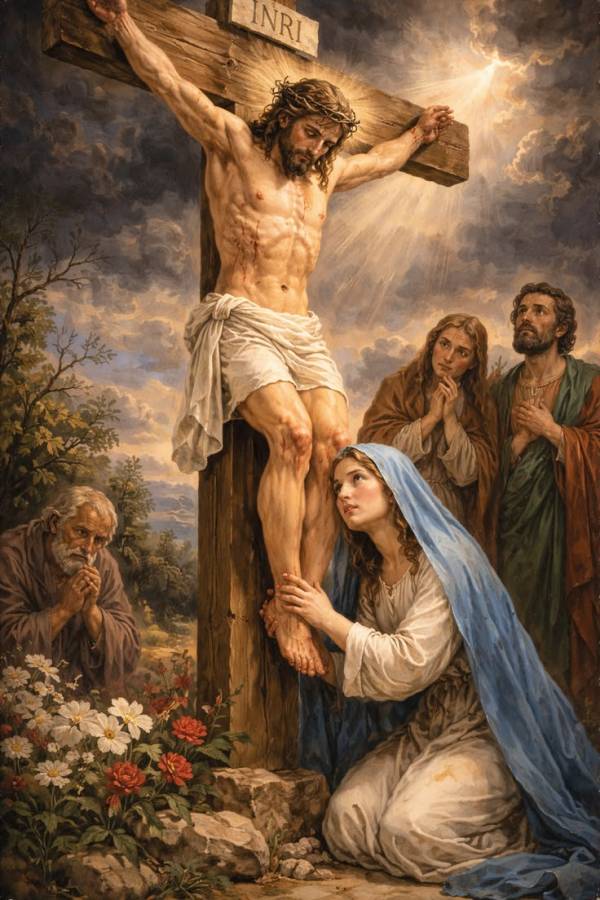
The question, “For what shall it profit a man, if he gain the whole world and suffer the loss of his soul?” cuts to the heart of a tension that every era rediscovers: the difference between a life that looks impressive and a life that is actually worth living.  We are surrounded by metrics — influence, fame, money, reputation, achievement, status — that promise satisfaction but often deliver only more insatiable hunger.  The question forces us to confront a truth we instinctively know: a person can win by every external measure and still feel hollow inside, a dried-up husk of a person.

Modern culture is skilled at rewarding the wrong things.  It celebrates accumulation, visibility, and speed.  It teaches us to optimize our schedules, polish our image, and chase the next milestone.  None of these pursuits are inherently harmful, but they become dangerous when they eclipse the quieter, more essential work of becoming a whole human being.  A person can spend decades climbing a ladder only to discover it was leaning against the wrong wall.

Losing oneself rarely happens in a dramatic collapse. More often, it happens gradually, when convenience replaces integrity, when ambition overrides relationships, when the greedy pursuit of More! More! More! crowds out the pursuit of meaning.  The world applauds these compromises; our inner life does not.  The cost is subtle but real: a thinning of character, a shrinking of joy, a sense that life is happening faster than we can live it.

To gain the world is easy.  It requires only that we follow the current cultural expectation.  To keep oneself intact is harder.  It demands reflection, boundaries, and the courage to choose depth over display, but only one of these paths leads to a life that feels like one’s own.

In the end, the question remains a challenge to every generation: what good is success if it costs you the very person you were meant to become?  The world offers many rewards, but none of them are worth the loss of yourself and your eternal spirit.


Website Built with WordPress.com.

Up ↑