Stench in the Shadows.

In the condominium association where I lived once upon a time, there was a strange occurrence that only a brave resident could resolve.  This is the true story.

The overstuffed garbage bags appeared twice weekly in the broom closet on the fifth floor of the condominium building.

What brought this to the attention of the residents was the overpowering stench of rotting foods in the bags.

On a Saturday morning, Miss Wanda, the bravest of the fifth-floor residents, had enough of the reek and marched to the broom closet.  Several residents followed her, for they wanted to be in on the revelation.  Wanda opened the door, and there it was: an overstuffed Hefty® bag emitting a stench that would knock a skunk off his beam.

Wanda took one of the bags and opened it up.  Everyone around her jumped back and held their noses.

“It smells like death,” Old Man Fontane gasped.  “Death on a plate of rotted sardines.”

“At least!” gagged Issac Brenner.  “It smells worse than my ex-wife’s armpits after a sweaty walk in the park.  I’d know that stench anywhere.  Barf!”

“Hoo-eee, Lordy!”  Mrs. Chisa Cooke walked away while holding her nose.  “Y’all enjoy.  I’m headed off to watch Julia reruns on my brand new television.”

Bravely, Miss Wanda dug into the garbage bag.  Slimy beet greens, a moldly banana, empty cartons, and paper brochures from the Poconos greeted her.  She dug around until she saw an envelope.  She reached for it with two fingers.

“Ah!  Well.”  She examined the address.  “Ah ha!  It’s from that brood across the hall from me.  I’ll talk to them.”  The neighbors nodded their heads and a few just whispered, “Ooo!” and “Yeah.”

Miss Wanda knocked on the Stankles’ door.  After talking with the grandmama, neighbors could hear the two women laughing before Miss Wanda returned to her condominium.

“So who did it?” Mrs. Chisa Cooke asked the next day in the laundry room.

“Oh, it was her youngest grandbaby, Tristane.  Do you know that ten-year-old is afraid of the dark, so he just tosses the garbage bags in the broom closet and runs back home!  His parents never check to see if the boy is doin’ his errands right.””


Number 7G.

A strange occurrence happened at the Cypress Row Condominiums many years ago.

One early morning, as Varina Pembroke-Sinclair stepped out of her condominium and into the hallway, an odd odor caught her nose.  She couldn’t quite identify it, for it was the most unusual and jarring odor she ever smelled in the hallway, and that was saying something at Cypress Row!  Sure, Miss Varina had a talent that proved she could pinpoint any of her neighbor’s aromas emanated from their condominiums, from the pot of oxtail soup simmering to the sharp tang of a newly opened crock pot filled to the brim with kimchee, and even the West Coast vineyard of a just-uncorked pinot noir.  But yet, this stench in the hallway was something else altogether.

Varina shrugged her shoulders, put the key in her lock, secured it, and headed down the hall to the elevator.

As she approached the elevator, the dank funk became a distinctive fusty skunk-like stench.  She turned her nose up into the air and gave a deep sniff.  It came from Number 7G, the closest condominium around the corner from the elevator.  The pungent odor clung to the air like an unwelcomed visitor.  Varina wrinkled her nose as she pressed the elevator button.  The pungent smell clung to the air like an unwelcome guest.  She again glanced at the door to Number 7G, its chipped paint and crooked lettering giving it an air of neglect.  The family inside had always been a mystery to her; shadowy figures who rarely ventured out, their muffled laughter and occasional arguments seeping through the walls.

The elevator bell chimed twice and the doors slid open.

Varina entered the elevator car.  She thought about 7G.  Not many people really knew the people who lived in 7G, and no one seemed to care enough to try, including Varina.  She couldn’t shake the feeling that there was more to the family than their infamous habits.  Rumors had swirled among the neighbors—whispers of strange visitors at odd hours, packages left at the door that were never retrieved, and the eerie glow of a flickering light that seemed to pulse through the windows late at night.  .  She shrugged her shoulders, took a deep breath, and rode the elevator down in silence.

As she exited the elevator on the ground floor, Varina welcomed the fresh, cool air with no smells, other than the Lysol used by the cleaning lady the evening before.

As Varina walked the five blocks to work, she resolved to uncover the truth.  She wasn’t one for gossip, but something about 7G gnawed at her curiosity.  What secrets were hidden behind that door?  And why did the smell seem to grow stronger over time?

Over the next few weeks, the smell from 7G only grew worse.  It wasn’t just the musty, skunk-like odor anymore.  It now had an acrid edge, as if something was rotting.  Varina couldn’t stand it, yet no one else on the floor seemed to smell it.  Her curiosity turned into unease, then fear, as the stench began to invade her own condominium.

One night, unable to sleep, Varina decided to talk face-to-face with the family in 7G.  She steeled herself, grabbed her keys, and knocked on their door.  The sound echoed through the silent hallway, but there was no answer.  She knocked again, harder this time, the smell making her gag.

The door creaked open.

The apartment was dark.  A dim light bulb on a table flickered in the corner, casting weird shadows on the walls.  Varina stepped inside, calling out tentatively.  The air was oppressive, heavy with the sickly odor, and the silence was deafening.

As she moved further into the apartment, her foot caught on something.  She looked down and gasped.  Strewn across the floor were piles of ashes, remnants of burned paper, clothes, and belongings.  The flickering light came from a makeshift altar, surrounded by melted candles and strange symbols etched into the walls.

And then she saw them.

The family sat on chairs in a circle, motionless.  Their eyes were wide open, staring at nothing, their bodies slumped as if drained of life.  Varina’s scream stuck in her throat as she realized they weren’t breathing.  Whatever had happened in 7G was far beyond anything she could comprehend.

She stumbled backward, fleeing the apartment, and called the police.  When they arrived, the family was gone along with every trace of the altar.  The room was empty, except for a lingering smell and the faint hum of an unseen presence.  Varina thought she lost her mind.  So did the police, and they left, laughing.

For weeks afterward, Varina couldn’t sleep.  The police dismissed her story as nonsense, chalking it up to old-fashioned hysteria.  But she knew better.  Something unnatural had taken root in 7G, and she feared it hadn’t left.

In the months that followed, Varina Pembroke-Sinclair carried the memory of 7G like a stone in her pocket; heavy, cold, impossible to ignore.  In time, the building returned to its routines, and the neighbors forgot the brief commotion around 7G.  Yet Varina knew the quiet was only a disguise.  Some nights, long after midnight, a thin ribbon of that same fetid odor would snake beneath her door, as if reminding her that what she witnessed had not ended; only shifted.  The door to 7G remained shut, its crooked numbers unchanged, yet she sometimes heard a soft rustling inside, like chairs being moved or someone rising slowly from a long, unnatural sleep.  And though she told no one, Varina felt certain the family had never truly left.  Something had been awakened in that condominium, something patient, something watchful, and it was only a matter of time before it sought her out and her sanity again at Cypress Row Condominiums.

The conclusion to this story is published on June 13, 2026.


The Quiet Edges.

There was once a resident in a condominium I owned, a man so enigmatic that no one ever quite claimed to know him.  He drifted through the halls like a rumor made flesh, and before long he became the quiet talk of the association.  Here’s the story:

He kept to himself, and barely anyone knew his name.  It was said that Alonzo’s jet black, laid down styled hair shone so bright it might have lit up all of Sage Pointe.  His hair was a shimmering emblem of confidence and unspoken connection.

“Alonzo,” those who knew his name would say, “He got the thickest, the baddest, the most outta-sight edges this side of Sage Pointe.”

“Alonzo?  Ain’t he the one with the black patent leather hair?”

“Shiny and bright, that Alonzo is.”

I know that Alonzo’s secret was SoftSheen Dark and Natural in “Jet Black.”  I’ve seen the box he threw out in the recycling bin.  His “secret” might have looked unnatural as vinyl patent leather shoes, but he had not one grey hair on his head.  It was a one-tone black from the back of his head to the slicked down edges in the front, from sideburn to sideburn.

As time passed, Alonzo’s hair became more than just a spectacle; it turned into a beacon of curiosity and a source of fascination at Sage Pointe.  People were in awe about him at the monthly condominium association meetings – the few times he bothered to show up.  They marveled at him in the church, drooled at him in the grocery store line, admired him at the barbershop, and speculated about his unknown secrets at the local diner.  Yet Alonzo carried on, keeping to himself, his glossy raven hair unfaltering, like a strange moon in its perennial glow.

But one summer evening, at the annual Sage Pointe party, Alonzo broke his silence.  He sauntered onto the wooden dance floor at the activity center with his head held high, dressed sharp as a razor in a cream‑colored linen suit that caught the breeze just so, a narrow burgundy tie tucked neatly against a crisp pale yellow shirt, and red shoes polished to a mirror shine.  The flashing dance lights cast dazzling reflections off both his raven‑black hair and the blinding shine of his shoes.  Eight gold rings gleamed on his fingers — thick, heavy bands with diamonds, emeralds, and garnets that flashed each time his hands cut through the air, catching the lights as surely as his raven‑black hair.  He moved with an easy, unhurried confidence, swaying to the beat of funk music like he had been born for that moment.

Earlier that evening, I watched as he stood off to the side of the party room sampling the appetizers— deviled eggs dusted with paprika, tiny ham biscuits, and those colorful cellophane-tipped toothpicks that skewered a variety of cheese cubes that squeaked when you bit into them.  He washed it all down with two strawberry daiquiris so cold that the condensation rolled down the red plastic Solo® cup like sweat on a July window.  He sipped them slow, savoring each icy, syrup‑sweet mouthful as though it were part of some private ritual that he wanted no one else to be a part of.

I watched him in awe along with the crowd and laughed when Alonzo pulled a small group of kids into his groove.  “It’s all in the soul, you crumb crunchers!  Dance like your hair shines brighter than the stars,” he declared, a wide smile breaking through his elusive façade.  That night, he wasn’t the enigma they had speculated about.  He was the rhythm, the light, the joy.

That is what everyone wanted to believe.

By the time the party was over, it was said that Alonzo’s edges shone so bright it might have lit up all of Sage Pointe.  After the party, although he disappeared into the quiet mystery of his condominium once again, his name would be remembered as the man who brought the condominium association an evening they would never forget.

But in the weeks and months that followed, people began to notice something strange: no one saw Alonzo at church, or in the grocery line, or even passing by the barbershop window.  His apartment blinds stayed drawn, his mailbox appeared untouched.  Some said he’d moved away; others whispered he’d simply slipped into the night the way he’d always lived— quietly, without explanation.  His silver car would be in his parking spot, and sometimes not.  His monthly assessments still were paid in full and on time.  But no one actually saw him.

Now on certain humid evenings, when the streetlights flicker and the cicadas fall silent, a few swear they’ve seen a glint, just a brief flash, like moonlight on patent leather, disappearing around the corner before they can call his name.  And in Sage Pointe, that is enough to keep the legend alive.

In time, the condominium association learned to stop asking where Alonzo had gone.  Life in Sage Pointe moved on, as it always does, yet something in the air felt slightly altered, as though a faint shimmer had been left behind.  The wooden dance floor where he’d once spun the children around seemed to hold a deeper polish, catching the light in ways no one could quite explain.  And every so often, when the dusk settled low and the streetlamps hummed to life, someone would pause mid‑stride, certain they’d caught the scent of pomade or felt the whisper of a beat only Alonzo could hear.  Whether he had slipped away to some quieter corner of the world or simply stepped into the shadows he’d always belonged to, no one could say.  But the memory of that night, and the man whose hair shone like a secret, lingered in Sage Pointe like a story half‑told, waiting forever for the rest of its truth to surface.


When the Hallways Talk.

A short story from the past.

For hours, JeVaughn Willard sat in his recliner, frowning at the sporadic thuds and rolling rumbles echoing through the Sage Pointe Condominium building.  He took another puff of his Kools and listened hard.  The sounds came and went with no discernible pattern, bouncing off the walls and rattling his nerves.  He strained his ears, trying to pinpoint the source, but the building’s acoustics made it maddeningly elusive.  He slid out of his recliner and ambled over to the picture window.  He pushed aside the slats of the Venetian blinds and was glad he was not in the howling thunderstorm.  JeVaughn returned to his recliner.

As the clock struck eight, he took a break from reading his latest mystery novel.  His overflowing garbage bin finally gave him a reason to investigate the noise in the hallway.  He grabbed the bag and shuffled out into the dimly lit hallway, trying to keep his ragged brown corduroy slippers from flying off of his feet.  The carpet muffled his footsteps, but the strange racket had grown louder.  Then, as he rounded a corner, the mystery revealed itself.

Two neighborhood kids, the brood of the Reverand and Mrs. Stankle, were tearing up and down the long corridor, kicking a slightly deflated soccer ball between their feet.

Bam!  The ball slammed against a wall, leaving a faint smudge before careening into the air.

Thud!  The ball rebounded off the ceiling, narrowly missing a flickering light sconce as it came down.

JeVaughn Willard sighed, the corners of his mouth twitching with restrained annoyance.  He trudged to the garbage chute and let the bag drop with a hollow clang, watching it disappear into the void.

“Pointless,” he muttered under his breath, sparing one last glance at the kids.  They laughed and shouted, blissfully unaware of their disruptive echoes.

JeVaughn tightened his terry cloth robe and shuffled back to his door.  “No use mentioning it to their parents,” he thought grimly.  “The reverend’s sermons are loud enough.  I don’t need him aiming one at me!”

Smoke, Scrape, Yell, Repeat.

A Lesson Neighbor Consideration.

After writing “The Sheriff of Decibels,” regarding the whole “your TV is too loud” saga with Mr. Wigg, the neighbor who might have been hearing phantom sounds, I thought I had earned a brief intermission in the neighborhood drama, but then it reminded me of one of the downstairs neighbors I had once, and those thoughts led to me think of a whole different angle.  Life in a condominium is basically a rotating cast of social challenges, and the next act began downstairs.

I lived in a condominium where one of my downstairs neighbors used her balcony like it was her personal broadcasting studio.  Whenever she had company, the visitors were always on the sidewalk below.  Their conversations rose straight up.  I didn’t even have to try to overhear; the dialogue arrived fully formed, projected upward with the confidence of someone who believed the entire building was her audience.  If she ever decided to start a podcast, she wouldn’t need equipment.  She already had the lungs for it.

Another neighbor was forever loud on her cell phone.  One afternoon, I heard her give out her bank account number, a passcode, and the balance.  Wow.

Then there’s the patio furniture.  There is a neighbor who, every time she shifts a chair on her balcony, it sounds like she’s dragging a cast-iron park bench across a stone floor.  I’ve heard less noise from actual construction sites.

There was the cigarette smoke from a cheap brand yet another neighbor probably bought by the truckload.  It drifted upward in slow, dramatic spirals, and somehow it slipped into my condo like it had a key.  One moment I’m enjoying fresh air; the next, my living room and kitchen smelled like a casino buffet circa 1960.  It wasn’t ideal, but I learned to adapt since the odor didn’t last more than a half hour or so.

But here’s the important part: I didn’t complain.  Not ever.  Not a text, not a note, not even a pointed throat-clear over the balcony railing.  Why?  Because this was life in a building full of people.  They talked loudly.  They scraped furniture.  They smoked.  They lived.  And unless someone was hosting a demolition derby in their living room, I tolerated the occasional disturbances.

Besides, after the Sheriff of Decibels dealings, I’ve developed a new appreciation for not becoming That Neighbor.  If I ever feel tempted to pick up the phone and lodge a complaint, I remember how it feels to be scolded for noises that may or may not exist.  It’s an excellent deterrent.

So, I let the balcony monologues rise, let the furniture screech across the concrete, let the cigarette smoke drift out and upward like a weather pattern.  I breathed, I adjusted, I moved on.  Because in the grand, chaotic symphony of condo living, sometimes the most intelligent thing you can do is simply not add your own instrument to the noise.

I just laughed it all off.


The Age of Adonis (Part 2)

Part 2 of 3:  The Quiet Virtues

Not long after watching the rise of our neighborhood Adonis — the sweat, the swagger, the ever‑expanding circumference of his upper body — I began noticing something else in the building.  Something smaller, quieter, and far easier to overlook.

It started with the older gentleman on the fifth floor, the one who always carries a canvas tote bag and walks with a slight shuffle.  I once saw him pause in the lobby to hold the door for a mother wrangling a stroller and two grocery bags.  He didn’t say much. He just nodded, smiled, and waited until she was safely inside.  No flexing.  No performance.  Just a simple act of courtesy that didn’t require an audience.

Then there’s the woman down the hall who leaves small seasonal decorations on her door.  They aren’t elaborate, just a tiny flowery wreath or a quilted, hanging pumpkin door decoration.  She never announces them, never tries to impress anyone.  But somehow those little touches soften the whole hallway, as if she’s quietly reminding the rest of us that beauty doesn’t have to shout.

And of course, there’s the retired engineer who waters the courtyard plants when no one else remembers.  He doesn’t make speeches about community or stewardship.  He simply notices what needs doing and does it, his hands moving with the calm competence of someone who has spent a lifetime tending to things that grow slowly.

None of these people would ever call themselves virtuous.  They would laugh at the idea.  They are simply living their lives with a kind of unselfconscious decency that doesn’t demand or look for applause.

It struck me one afternoon, watching the engineer mist the begonias while Adonis strutted past, that quiet virtues are the ones that actually hold a place together.  Not the loud displays of strength or the curated personas, but the small, steady acts that ask for nothing in return.

The world has always had its Adonises; men who sculpt themselves into monuments and then wonder why no one bows.  But the world has also always had its quiet souls, the ones who keep the doors open, the plants alive, the hallways gentle.

And if I’m honest, it’s the quiet ones who make a neighborhood livable.  They are the ballast, the steadying weight, the reminder that goodness doesn’t need to be dramatic nor a showboat to be real.

In a culture obsessed with spectacle, the quiet virtues are almost radical these days.  They whisper instead of shout.  They build instead of pose.  They endure long after the muscles deflate and the spotlight moves on.

And perhaps that is the real miracle: that in a world full of noise, the softest lives are often the ones that speak the truth most clearly.

Part 3 will be published on April 18, 2026.

A Ministry of Mayhem.

Parents who do not teach their children to respect and obey actually prepare them for a life out of step with God’s Word and in step with the devils.

You might assume that a man styling himself a pastor would have a household that at least vaguely exhibits the teachings of Jesus.  You know, the kind of pastor who should be an example to society, a spiritual guide, a moral compass, and a weekly dispenser of authentic wisdom on the stage of his Fellowship Congregation.  You might even imagine that he’d model basic manners and modesty.

A long time ago, when I lived in a certain condominium, one such person paraded bare-chested in the condominium hallways and public sidewalks.  You’d probably would think that this “pastor” would’ve covered himself up and not parade around in public bare-chested.  By doing that, he was teaching his son well to do the same, which eventually happened, too.  As time when on, his pre-teen daughter was wearing low cut tops and belly-button-showing jeans and beachwear.

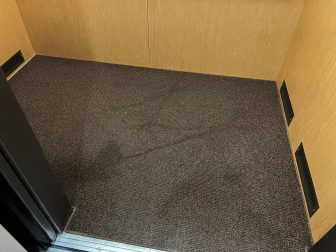
This particular family let their children throw out the family garbage, not through the garbage chute, but leave it hidden in the janitor’s closet until the odors compelled other residents to investigate.  The kids squirted soda or some sort of drink on the carpet in the elevator (I saw them do that just as the elevator door opened.)  If the parents double-checked their kids’ chores and where they were, they could’ve corrected them and set them on the right path.  Maybe.

Their children, old enough to know better, ran through the halls at all hours: dawn, mid‑afternoon, nearly midnight.  The thundering footsteps were so intense I occasionally wondered if the building had been repurposed as a training facility for buffalo stampedes.

And again, these were not toddlers.  These were pre‑teens, fully capable of understanding rules, boundaries, and the concept of “other people exist,” so be thoughtful!

The “pastor’s” wife, too, contributed to her own public ministry: it was an evangelization of scent so potent it could’ve knocked a person out.  It was so strong and long-lasting, it made the neighbors think she most likely applied the body lotions and colognes uncontrollably from head to toe.  Her cologne didn’t merely enter the hallways or elevator; it conquered, planted a flag, and dared anyone to challenge its sovereignty.  Her neighborliness went as far as waving at you with her arm behind her head, but never turning to face you and say, “hello.”

Maybe I’m all wet here; however, my thoughts always were that when a husband/father is a pastor of some wort, he guides his family on the path of holiness according to Jesus’ teachings and they all become a positive example to the neighborhood and to the world.  Yet, in that case I wrote about, they weren’t all that friendly, the kids were wild, and they sure solidified the neighbors’ opinions that a “pastor’s” family can be a shining example of what not to do.

In the end, it’s sad: a “pastor” who cannot shepherd his own household, a family whose public displays consists of hallway chaos, elevator dirtying, public undress, and overall disrespect towards neighbors.

But beneath all that sits a quieter truth.  When parents refuse to teach respect, discipline, and consideration, the world instead becomes their children’s classroom, and the lessons are rarely kind.  A household without order doesn’t just scandalize and inconvenience its neighbors; it forms a generation unprepared for the responsibilities, reverence, and self‑control that a faithful and respectable life requires.


Fusty Skunk, Rotting Fish.

When I lived at the Sage Pointe Condominiums, I never knew which putrid odor would ambush my unsuspecting nose when I opened my door to the hallway or when I stepped on or off the elevator.

The hallway had its own olfactory roulette wheel.  Some days the marijuana smelled like musky, gassy skunk.  Other days it hit like rotting fish drenched in pungent patchouli.  Sometimes it was a perfect blend of old, fusty socks and rank elephant.  Sometimes it smelled of eucalyptus.  Add to that the lingering smell of cheap cologne and cigarettes, greasy sausage, and those scents stayed for hours, only to fade and make room for the next dreadful strain of stench.

One of the building’s finest “amenities” was the elevator, which faithfully preserved the perfume of whoever rode it last.  I have taken rides perfumed by Grandma Weede’s lingering skunky marijuana haze from an hour earlier.  On other days, the odor du jour was a baffling mix of candy‑sweet pre‑teen bath and body sprays and lotions from the Stankle girls.  It was a combination that somehow managed to get stronger the farther down you travelled on the elevator car.

Mrs. Stankle, on her own, specialized in mysterious stenches that defied classification.  Some days it was sugary carrots, and other days it was akin to coconut-musk that went terribly wrong.  And sometimes it was something so indescribable that the only reasonable response was to pray for deliverance.

Adonis was no different.  If he didn’t just return from the gym dripping with smelly sweat, he reeked of a potent blend of sweat and Drakkar Noir, a combination that could have knocked a grown adult back a full step or two.  His life is lived in bold, glossy strokes of sweat, swagger, and spectacle.

Then there’s the Weede Family, whose contributions varied by the hour.  Their hallway offerings ranged from “forest‑floor funk” to “burnt tire with herbal aspirations.”  Or they left the elevator lingering with the aroma of greasy chicken or the tang of old tacos.  Their door was like a portal to a different dimension, one where ventilation systems and their filters went to die.

One entire floor in one of the complex’s buildings reeked of cheap cigarette tobacco that emanated from just one condo unit.

Then there was the smell of wet dog, musty dog, stale dog.  It emerged unpredictably, but usually in the late afternoons, and clung to the elevator walls until it was finally overpowered by some other mysterious stench.

The elevator contributed its own disturbing whiffs of diesel fuel, and that’s a story for another day.

Rarely did the hallways offer the uplifting aromas of barbecue or simmering spaghetti sauce.  When I brought my dog home from his Spa Day appointment, he became a walking air freshener— sort of a jasmine-lavender-powdery scent that lasts until his next appointment.  Since my condo retains this scent, I imagine he also left his trail through the hallways and elevator, just like everyone else, so maybe it was disturbing to others.

At Sage Pointe, the smells changed by the hour because there was always someone contributing to the fragrant or stinky bouquet.  Rarely—oh so rarely—did the hallways offer the comforting aromas of barbecue or sweet baked cakes.  Those scents were the rarities of Sage Pointe: imagined, longed for, and almost certainly elusive.


The Poverty of Perpetual Anger.

There is a particular sadness in watching people who live in a constant state of anger, and I see this quite a lot in my neighborhood, and especially since 2020.  Their anger is not the righteous anger that rises to defend the vulnerable, but the chronic, simmering kind; the kind that becomes a personality, a worldview, a permanent narrowing of the soul.  Some of these people turn ugly and violent when they are cordially greeted by neighbors.  These are people who treat every encounter as a contest, every disagreement as a threat, every difference as a personal insult.  Perhaps they believe they are defending themselves, but in truth they are defending the walls that imprison them.

Anger becomes their only vocabulary.  They speak it fluently, instinctively, even proudly, and peppered heavily with vulgar and filthy words.  But beneath that lies a deep poverty of spirit.  A person who must always be angry and offensive is a person who has forgotten how to be free and kind.

The tragedy is not merely that they harm others—though they do.  The deeper tragedy is what they lose within themselves without realizing it.

  • They lose the ability to be surprised by goodness.
  • They lose the capacity for joy that comes from generosity.
  • They lose the peace that only humility can give.
  • They lose the richness of a larger world than their own reflection.

They trade all of this for the brittle satisfaction of being “right” and boorish, even when that “rightness” isolates them.  They probably do not realize that the fortress they build to keep others out is the same fortress that keeps them in.

My sadness for them is not schmaltzy.  It is not the soft sadness of pity.  It is the sharper sadness that comes from recognizing wasted possibility.  These are people who could be expansive, curious, generous, a positive addition to the neighborhood, but instead they choose the cramped rooms of anger and rejection.  They choose to live in a world too small for any soul.  It is as though they are possessed by demons.

A life fueled by anger cannot lead to peace.  A heart closed to others cannot experience love.  A mind that rejects difference cannot grow.  They may cling to their fury and their narrowness as if these things protect them, but in the end, they protect nothing.  They only ensure that the person holding them remains untouched by the very things that make life worth living.

Website Built with WordPress.com.

Up ↑