
Another Whiff that Crossed the Line.

And then there was the unmistakable contribution of The Weede Family, whose fusty skunk aroma drifted through the hallways with the determination of a creature lazily seeking freedom.

I have lived in buildings that had friendly doormen and fresh flowers in the lobby, and truly dedicated cleaning crews that cleaned and deodorized a couple times a week.  When I lived in one of those large mid‑rise buildings, the kind with long hallways, welcoming vestibules, perpetually humming vents, there was a cast of neighbors who could each produce their own documentary, for everyone had such pleasantly interesting lives to tell.

However, when I lived at Sage Pointe Condominiums, there were odors of marijuana, tobacco, and perfume that were thickly layered and ever evolving on every floor and in the lobby.  That condominium association was immensely different than all the rest.  Life there was, indeed, never dull, particularly if you had a sensitive nose or didn’t care how dirty the common areas were.  Speaking of the common areas, the walls were always dirty with oil or Cheetos® dust, the common hall carpets were never cleaned, the lobby walls were a patchwork of rinky dink Spackle® repairs and paint that never matched.  “They” never wanted to repaint the entire walls the proper way.

In today’s essay, I’m introducing you to one of the more fusty aromatic residents, The Weede Family.

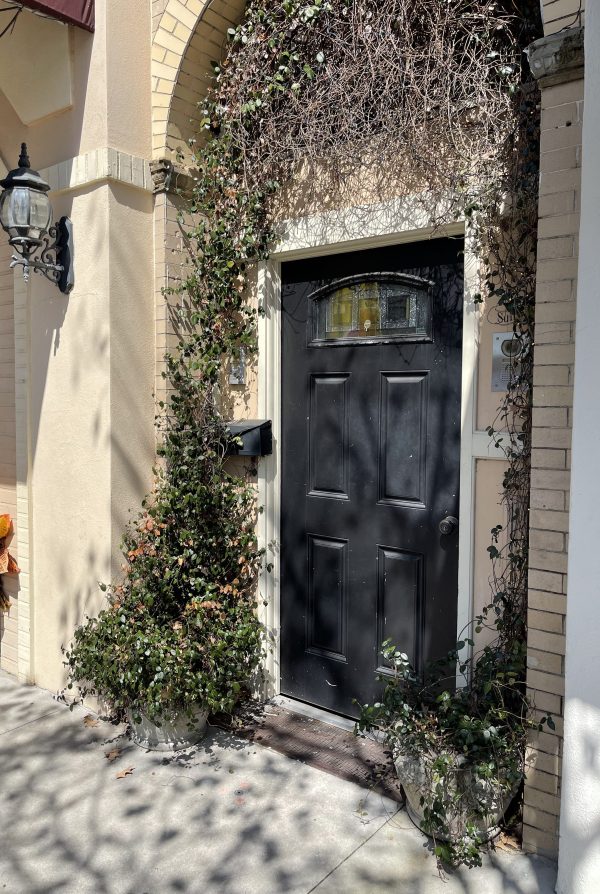
They lived on my floor and at the far end.  One would never think that the odors from their wing would reach way down to my wing, but they did.  Whenever I opened my front door or stepped off the elevator, I braced myself.  I never knew what stench or invisible cloud would greet me, or what new olfactory assault would come barreling toward my unsuspecting nose.

The fetid odors were unmistakably marijuana.  Not just one kind, but several, and one would never know from one day to the next what strain they’d be smoking.  The worst was the kind that smelled like dead, rotting skunk.  Sometimes that stench was mixed with cheap perfume, and it was enough to suffocate a maggot.  Truthfully, I was surprised I never smelled it in my own condominium unit, but only out in the hallway.

By the time I learned to recognize their specific bouquet and the shifting medley of strains that was each more pungent than the last, I also learned something else: in a building like ours was, no door was ever fully closed, no hallway ever truly empty.  Scents travelled like rumors as they drifted, settled, and rose again when you least expected it.  The Weede Family managed to turn our peaceful corridor into a living, breathing testament to that truth.  Their skunky, dank fog became part of the building’s strange ecology, and a reminder that even in the most ordinary mid‑rise building, the air itself can tell stories you’d never believe unless you smelled them yourself.


The Mark of Mordechi.

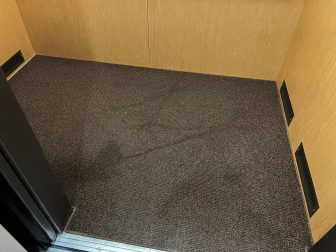
There were always dirty spots on the hallway carpets and in the elevators when I lived at Sage Pointe.  At first glance, they looked like the usual suspects, perhaps greasy take‑out containers leaking through flimsy bags, or perhaps the aftermath of a dog with poor timing.  Whatever their origin, the stains remained year after year after year, since no one on the board of directors ever bothered to call a carpet‑cleaning company to shampoo the carpets.

One weekend, though, someone obviously made an effort.  A sharp smell of Resolve® or Shout® hung in the hallways, proof that some anonymous soul had tried to scrub away the blotches.  Whoever it was deserved a medal for attempting to keep the place somewhat presentable.

Then came the Saturday afternoon when I stood waiting for the elevator to reach my floor.  At last, the doors slid open, and there stood Maddee and her younger brother, Mordechi, dripping from the pool and armed with their usual assortment of floaties and bottles.  Just as the doors parted, I caught Maddee in mid‑swoop, giving her water bottle a final flourish and spraying the elevator carpet.  When I looked down, I saw she had left a large, wet “M” beside the other permanent stains.  She and her brother stepped out quickly, their faces tight with guilt and silence.

I greeted them anyway, asked how they were. “How you doing?” I asked.  Maddee’s cheeks flushed deep crimson, and she stammered and babbled through a jumble of half‑formed words as she tripped over her tongue.  She knew that I knew.

The next morning, more than twelve hours later, I rode the elevator again.  The wet “M” was still there.  If it had been water, it would have evaporated long before.  Whatever she’d squirted (soda? juice? suntan lotion?) had soaked in and stayed put.  It’s still there to this day.

Funny, isn’t it, how the Stankle kids, the offspring of Adonis the preacher man and his aromatic wife, aren’t always the paragons one might expect.  And the kids weren’t toddlers; at the time this happened she was about eleven, he was about nine.  Both were old enough to know better and old enough to choose differently.  After all, their father preached it every Sunday and Wednesday on stage.

In a condominium association like Sage Pointe, the carpets in every building told the truth long before the residents did.  Every stain, every spill, every careless squirt from a child’s bottle became part of the story we all had to live with.

Courtesy, like cleanliness, is a shared responsibility.  It’s one that begins with small choices made when no one is supposed to be watching.  And yet, as those lingering marks remind us, someone always is watching, even if it’s only God.


The Ease of Dishonesty.

A Lesson in Bold Dishonesty and Weakening Trust.

I am continually taken aback by the ease with which people will boldface lie, not just to me, but to anyone who happens to be standing in front of them.  These aren’t always small white lies, but more and more they are bold, unapologetic falsehoods delivered with absolute confidence.  Lying has always existed, of course, but the past five or six years have unleashed a wave of dishonesty that feels different; bolder, more shameless, and normalized.  Of course, dishonesty is nothing new; people have been lying for centuries.  Yet something about the past five or six years feels different, as if a cultural shift has loosened whatever thin thread once held personal integrity together.  The onslaught has been relentless.

I see it everywhere.  The management company personnel for our homeowner’s association lie as if it’s part of their operating manual.  Family members lie when the truth would have been easier.  Vendors lie to secure business or cover their incompleteness.  Co-workers lie to dodge accountability.  It’s as if truth has become optional, as if it was a quaint relic from another era.

What unsettles me most is not just the dishonesty itself, but the casualness of it, the speed, the confidence, and the ease of looking right in your eyes as their lies float off their lips.  The way some individuals lie as naturally as breathing, without hesitation or shame.  It makes you question how many conversations you’ve had that were built on foundations that never existed.  It makes you wonder how many times you’ve given someone the benefit of the doubt when they didn’t deserve it.

I’m left grappling with a difficult truth: trust is no longer something that can be assumed.  It must be earned, guarded, and sometimes rebuilt from scratch.  And while I can’t control the behavior of others, I can choose to remain anchored in honesty myself because in a world where lies have become effortless, telling the truth feels almost like an act of rebellion.

In the end, what troubles me greatly isn’t just the lies themselves, but the growing acceptance of them, as if honesty has become an outdated virtue rather than a basic expectation.  I can’t control the behavior of HOA managers, family members, vendors, friends, or coworkers, but I can control the standards I hold for myself.  Choosing truth in a culture that increasingly shrugs at deception feels almost radical, yet it’s the only way to keep my sanity.  If anything, the dishonesty I encounter only strengthens my resolve to remain clear‑eyed, principled, and unwilling to let other people’s falsehoods define the way I move through the world.  But in the long run, I barely trust anyone anymore.


Cutting Cardboard.

We had just ordered our meal, when a party of four was seated two tables from us.

Grind.  Grind.  Grind.

“Where is that sound coming from?” I asked Best Friend as he sipped his drink.  “It sounds like somebody cutting corrugated cardboard with a serrated bread knife.”

“What’s that?”

“I hear someone cutting corrugated cardboard with a serrated bread knife.  It’s that specific of a sound.  Listen.”

Grind.  Grind.  Grind.

“It’s the dog,” Best Friend nonchalantly quipped as he put down his drink.

“Whoa!” I whispered.  I leaned over a little bit to the left and looked past Best Friend’s shoulder.  Sure enough, at the table where the party of four sat, was a Yorkie on the man’s lap, chewing on food from the man’s plate and making a sound like somebody cutting corrugated cardboard with a serrated bread knife.  Then I witnessed the man put down one of those doggie pads on the floor and set the Yorkie on it, whereby Yorkie promptly did his business.  Everyone else at that table was oblivious and didn’t bat an eye.

Ewwww.

I am not a fan of dogs or any sort of animals in restaurants and stores.  I find it dirty, and it puts the question of health codes out there.  Service dogs are okay, but not “emotional service” or those “just because I can’t live two minutes without Fluffy” animals inside stores and especially restaurants.  Bleh.

One of the grocery store chains in our area put a stop to people bringing dogs or any animals into their stores, except for service animals.  I agree with that.  And, please, no dogs in grocery carts.  I saw that exact thing at one grocery store a couple years ago.  Where have those rear ends been?  I never saw anyone wash those grocery carts, either.

It’s so gross!


Hack, Steal, Swipe, and Other Modern Courtesies.

It’s the Language of Plunder, and it’s all the rage I’m talking about today.

Every so often, my thoughts drift toward the strange new definitions floating around in the modern lexicon.  It’s those little word fads that flare up, spread everywhere, and then vanish the moment a shinier bit of slang arrives.  A word fad, as I see it, is a piece of language used mindlessly, repeated without understanding, and destined for the linguistic landfill as soon as the next trend rolls in.

One of the most abused is hack.  We now have hair hacks, cooking hacks, travel hacks, security hacks, hacks for everything under the sun.   The word is slapped onto any tip, trick, or mildly useful suggestion.  Yet its true definitions include “gaining unauthorized access” and “cutting with heavy blows.”  Neither definition suggests something gentle, clever, or admirable.  Hack!

But instead of offering tips such as hair tips, security tips, cooking tips, we hack, hack, hack.  Take unauthorized access.  Grab and run.  Rip off.  Steal.

Which brings me to another disturbing phrase I hear far too often: “I’m going to steal that idea!”

Usually, it’s said when someone supposedly admires another person’s décor, recipe, style, or skill.  Once upon a time, we might have simply complimented the person.  We might even (brace yourself) have asked permission to borrow the idea.  However, courtesy is apparently passé these days.  Why ask when you can proudly announce your intention to steal from that person?

Why, indeed?  Hands up!  Hand it over!

So now everything is framed as theft: steal, swipe, take, hack.  Even admiration is expressed in The Language of Plunder.

It’s a small thing, perhaps, however, small things shape habits, and habits shape culture.  When our everyday speech defaults to the vocabulary of taking, it’s no wonder the world feels increasingly coarse, transactional, and grabby.

And yet, here we are.  This is the way of things now.

In the end, these little phrases are not harmless quirks of speech; they reveal how casually we treat one another.  When the language of theft becomes the language of admiration, something in our cultural posture shifts away from gratitude, away from courtesy, away from the simple dignity of asking.  Words shape habits, and habits shape the world we build together.  If we want a gentler world, perhaps we begin by speaking as though one is still possible.


When the Hallways Talk.

A short story from the past.

For hours, JeVaughn Willard sat in his recliner, frowning at the sporadic thuds and rolling rumbles echoing through the Sage Pointe Condominium building.  He took another puff of his Kools and listened hard.  The sounds came and went with no discernible pattern, bouncing off the walls and rattling his nerves.  He strained his ears, trying to pinpoint the source, but the building’s acoustics made it maddeningly elusive.  He slid out of his recliner and ambled over to the picture window.  He pushed aside the slats of the Venetian blinds and was glad he was not in the howling thunderstorm.  JeVaughn returned to his recliner.

As the clock struck eight, he took a break from reading his latest mystery novel.  His overflowing garbage bin finally gave him a reason to investigate the noise in the hallway.  He grabbed the bag and shuffled out into the dimly lit hallway, trying to keep his ragged brown corduroy slippers from flying off of his feet.  The carpet muffled his footsteps, but the strange racket had grown louder.  Then, as he rounded a corner, the mystery revealed itself.

Two neighborhood kids, the brood of the Reverand and Mrs. Stankle, were tearing up and down the long corridor, kicking a slightly deflated soccer ball between their feet.

Bam!  The ball slammed against a wall, leaving a faint smudge before careening into the air.

Thud!  The ball rebounded off the ceiling, narrowly missing a flickering light sconce as it came down.

JeVaughn Willard sighed, the corners of his mouth twitching with restrained annoyance.  He trudged to the garbage chute and let the bag drop with a hollow clang, watching it disappear into the void.

“Pointless,” he muttered under his breath, sparing one last glance at the kids.  They laughed and shouted, blissfully unaware of their disruptive echoes.

JeVaughn tightened his terry cloth robe and shuffled back to his door.  “No use mentioning it to their parents,” he thought grimly.  “The reverend’s sermons are loud enough.  I don’t need him aiming one at me!”

Smoke, Scrape, Yell, Repeat.

A Lesson Neighbor Consideration.

After writing “The Sheriff of Decibels,” regarding the whole “your TV is too loud” saga with Mr. Wigg, the neighbor who might have been hearing phantom sounds, I thought I had earned a brief intermission in the neighborhood drama, but then it reminded me of one of the downstairs neighbors I had once, and those thoughts led to me think of a whole different angle.  Life in a condominium is basically a rotating cast of social challenges, and the next act began downstairs.

I lived in a condominium where one of my downstairs neighbors used her balcony like it was her personal broadcasting studio.  Whenever she had company, the visitors were always on the sidewalk below.  Their conversations rose straight up.  I didn’t even have to try to overhear; the dialogue arrived fully formed, projected upward with the confidence of someone who believed the entire building was her audience.  If she ever decided to start a podcast, she wouldn’t need equipment.  She already had the lungs for it.

Another neighbor was forever loud on her cell phone.  One afternoon, I heard her give out her bank account number, a passcode, and the balance.  Wow.

Then there’s the patio furniture.  There is a neighbor who, every time she shifts a chair on her balcony, it sounds like she’s dragging a cast-iron park bench across a stone floor.  I’ve heard less noise from actual construction sites.

There was the cigarette smoke from a cheap brand yet another neighbor probably bought by the truckload.  It drifted upward in slow, dramatic spirals, and somehow it slipped into my condo like it had a key.  One moment I’m enjoying fresh air; the next, my living room and kitchen smelled like a casino buffet circa 1960.  It wasn’t ideal, but I learned to adapt since the odor didn’t last more than a half hour or so.

But here’s the important part: I didn’t complain.  Not ever.  Not a text, not a note, not even a pointed throat-clear over the balcony railing.  Why?  Because this was life in a building full of people.  They talked loudly.  They scraped furniture.  They smoked.  They lived.  And unless someone was hosting a demolition derby in their living room, I tolerated the occasional disturbances.

Besides, after the Sheriff of Decibels dealings, I’ve developed a new appreciation for not becoming That Neighbor.  If I ever feel tempted to pick up the phone and lodge a complaint, I remember how it feels to be scolded for noises that may or may not exist.  It’s an excellent deterrent.

So, I let the balcony monologues rise, let the furniture screech across the concrete, let the cigarette smoke drift out and upward like a weather pattern.  I breathed, I adjusted, I moved on.  Because in the grand, chaotic symphony of condo living, sometimes the most intelligent thing you can do is simply not add your own instrument to the noise.

I just laughed it all off.


Live Well and Worthily.

Life is short, and it is meant to be lived well.  Wouldn’t you rather pour your energy into living it with virtue, steadiness, and joy than spend your days wrestling with every distraction that tries to muddle it?

Life is much too short to . . .

. . . waste time.

. . . not read the Bible.

. . . read tasteless books/magazines.

. . . be subjected to vulgar language.

. . . be exposed to disparaging gossip.

. . . argue with strangers on the Internet.

. . . be around people with no sense of humor.

. . . be around combative and negative people.

. . . watch a program that turns out to be vapid.

. . . listen to the “news” when there isn’t any news.

. . . not crack open a book written by or about a saint.

. . . be entertained by raunchy “entertainers” and “artists.”

. . . put up with the rat-a-tat-tat of unimportant intrusions.

Life— wouldn’t you rather live it well and virtuous than fight what’s interfering with it?


A Ministry of Mayhem.

Parents who do not teach their children to respect and obey actually prepare them for a life out of step with God’s Word and in step with the devils.

You might assume that a man styling himself a pastor would have a household that at least vaguely exhibits the teachings of Jesus.  You know, the kind of pastor who should be an example to society, a spiritual guide, a moral compass, and a weekly dispenser of authentic wisdom on the stage of his Fellowship Congregation.  You might even imagine that he’d model basic manners and modesty.

A long time ago, when I lived in a certain condominium, one such person paraded bare-chested in the condominium hallways and public sidewalks.  You’d probably would think that this “pastor” would’ve covered himself up and not parade around in public bare-chested.  By doing that, he was teaching his son well to do the same, which eventually happened, too.  As time when on, his pre-teen daughter was wearing low cut tops and belly-button-showing jeans and beachwear.

This particular family let their children throw out the family garbage, not through the garbage chute, but leave it hidden in the janitor’s closet until the odors compelled other residents to investigate.  The kids squirted soda or some sort of drink on the carpet in the elevator (I saw them do that just as the elevator door opened.)  If the parents double-checked their kids’ chores and where they were, they could’ve corrected them and set them on the right path.  Maybe.

Their children, old enough to know better, ran through the halls at all hours: dawn, mid‑afternoon, nearly midnight.  The thundering footsteps were so intense I occasionally wondered if the building had been repurposed as a training facility for buffalo stampedes.

And again, these were not toddlers.  These were pre‑teens, fully capable of understanding rules, boundaries, and the concept of “other people exist,” so be thoughtful!

The “pastor’s” wife, too, contributed to her own public ministry: it was an evangelization of scent so potent it could’ve knocked a person out.  It was so strong and long-lasting, it made the neighbors think she most likely applied the body lotions and colognes uncontrollably from head to toe.  Her cologne didn’t merely enter the hallways or elevator; it conquered, planted a flag, and dared anyone to challenge its sovereignty.  Her neighborliness went as far as waving at you with her arm behind her head, but never turning to face you and say, “hello.”

Maybe I’m all wet here; however, my thoughts always were that when a husband/father is a pastor of some wort, he guides his family on the path of holiness according to Jesus’ teachings and they all become a positive example to the neighborhood and to the world.  Yet, in that case I wrote about, they weren’t all that friendly, the kids were wild, and they sure solidified the neighbors’ opinions that a “pastor’s” family can be a shining example of what not to do.

In the end, it’s sad: a “pastor” who cannot shepherd his own household, a family whose public displays consists of hallway chaos, elevator dirtying, public undress, and overall disrespect towards neighbors.

But beneath all that sits a quieter truth.  When parents refuse to teach respect, discipline, and consideration, the world instead becomes their children’s classroom, and the lessons are rarely kind.  A household without order doesn’t just scandalize and inconvenience its neighbors; it forms a generation unprepared for the responsibilities, reverence, and self‑control that a faithful and respectable life requires.


Website Built with WordPress.com.

Up ↑