
The Profit That Destroys.

The question, “For what shall it profit a man, if he gain the whole world and suffer the loss of his soul?” cuts to the heart of a tension that every era rediscovers: the difference between a life that looks impressive and a life that is actually worth living.  We are surrounded by metrics — influence, fame, money, reputation, achievement, status — that promise satisfaction but often deliver only more insatiable hunger.  The question forces us to confront a truth we instinctively know: a person can win by every external measure and still feel hollow inside, a dried-up husk of a person.

Modern culture is skilled at rewarding the wrong things.  It celebrates accumulation, visibility, and speed.  It teaches us to optimize our schedules, polish our image, and chase the next milestone.  None of these pursuits are inherently harmful, but they become dangerous when they eclipse the quieter, more essential work of becoming a whole human being.  A person can spend decades climbing a ladder only to discover it was leaning against the wrong wall.

Losing oneself rarely happens in a dramatic collapse. More often, it happens gradually, when convenience replaces integrity, when ambition overrides relationships, when the greedy pursuit of More! More! More! crowds out the pursuit of meaning.  The world applauds these compromises; our inner life does not.  The cost is subtle but real: a thinning of character, a shrinking of joy, a sense that life is happening faster than we can live it.

To gain the world is easy.  It requires only that we follow the current cultural expectation.  To keep oneself intact is harder.  It demands reflection, boundaries, and the courage to choose depth over display, but only one of these paths leads to a life that feels like one’s own.

In the end, the question remains a challenge to every generation: what good is success if it costs you the very person you were meant to become?  The world offers many rewards, but none of them are worth the loss of yourself and your eternal spirit.


The Gentle Art of Wholesome Reading.

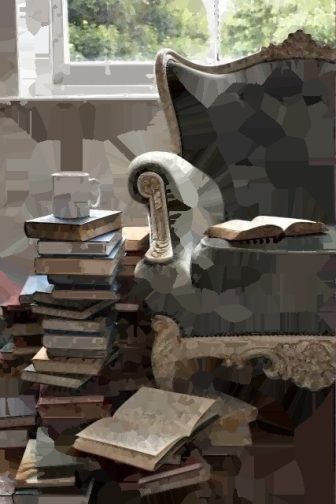
There is a particular enjoyment in reading good, wholesome books— a joy that feels almost old‑fashioned in the best possible way.  These are the books that don’t shout for our attention or compete with the noise of the world because they simply open a door and invite us into a place where I can breathe.

Wholesome books remind us that goodness is not naïve, that beauty is not fragile, good language is a delight, and that truth can be spoken without cynicism.  They offer characters who struggle honestly, worlds that lift rather than darken, and stories that leave us a little more human than they found us.  In a culture that often rewards vulgarity, shock, and spectacle, these books feel like a quiet rebellion.

There is also a deep restfulness in them. When we read something good and clean and true, our minds unclench.  We remember that gentleness is not weakness and that hope is not foolish.  Even a simple story told with sincerity can become a small refuge.

And perhaps that is the greatest joy of wholesome reading: it forms us.  It shapes our imagination toward the good.  It teaches us to look for light, even in ordinary places.  It reminds us that the world is still full of things worth loving.

A good book doesn’t just entertain; it nourishes us, and in a time when so much reading leaves us scattered or weary, finding a book that restores us is its own quiet ways.

So far this year, I have read the following good books.  They are in the order of publication year.

Seeking the Heart of Christ by Saint Claude La Colombière (1680)

Ole Mammy’s Torment by Anne Fellows Johnston (1897)

Light and Peace: Instructions for Devout Souls to Dispel Their Doubts and Allay Their Fears by Carlo Guiseppi Quadrupani (1980)

The Wisdom of Fulton Sheen: 365 Days of Inspiration (2020)


The Decline of Language Originality.

Have you noticed that our language has gone stale?  Once vibrant words and phrases have been replaced by a handful of recycled expressions that people toss around as if cheap confetti.  We’ve become a culture of verbal shortcuts—catchphrases, memes, and pre-chewed reactions—leaving very little room for originality, nuance, or even basic thought.

So perhaps it’s time to retire a few of these linguistic relics and replace them with something more intelligent, more intentional, and frankly, more dignified.

Take cringe, for example.  This single word now is deployed as a universal dismissal, a way to avoid forming an actual opinion.  Instead of describing what makes us uncomfortable or why, we simply slap the “cringe” label on it and move on.  It’s the conversational equivalent of shrugging.

Then there’s the ever popular “What! What?”  That’s a phrase that pretends to express astonishment but usually signals nothing more than performative confusion.  It’s noise masquerading as reaction.

And of course, the internet’s favorite template:  Tell me you’re ____ without telling me you’re ____.  Perhaps it was a clever structure the first time it appeared, perhaps even the second time.  But now it’s a tired formula, a linguistic Mad Libs game that saves us from the burden of crafting an original thought.

“How cool is that?” has also run its course.  It’s a placeholder, a filler, a way to feign enthusiasm without committing to any real sentiment.  It’s a way for the older generation to be hip with the kids.  It’s the verbal equivalent of nodding politely while thinking about something else.

“The fourth be with you”—a absurd pun that has lived far, far beyond its natural lifespan and continues to resurface every May, as if repetition alone could make it clever again.

And finally, there’s IYKYK (“if you know, you know”).  Here’s a phrase that pretends to signal insider knowledge but usually functions as a way to avoid explaining anything.  It’s exclusivity without substance.

Here’s a list of my suggestions of clichés and phrases we need to retire post haste:

Glow Up

Gaslight

Today years old.

Narcissist / Narcissism

Tell me you’re ____ without telling me you’re ____.

Chilling (as in, “chilling details,” “chilling video,” et cetera)

W’s (or anything using “W” for the word “win.”)

May the fourth be with you.

Awesome / Amazing

Asking for a friend.

You (We) got this!

How cool is that?

Game changer

Wait!  What?

IYKYK

Literally

Cringe

Iconic

The “F” word

These expressions are simply worn out, dehydrated by overuse, leaving behind only the dry husk of what once felt fresh.  Language deserves better, and so do we.  Thoughtful speech invites thoughtful living.  When we choose words with care, we sharpen our minds, deepen our conversations, and reclaim a bit of originality in a world that keeps trying to flatten everything into sameness.

If we want richer conversations, we must start by choosing richer language.  Retiring these worn-out phrases isn’t about being pretentious; it’s about making room for clarity and genuine expression.  In a culture that thrives on shortcuts, choosing real words might just be the most radical act of all.


The Stankles.

I live in a large mid‑rise building, the kind with long hallways, welcoming vestibules, perpetually humming vents, and a cast of neighbors who could each anchor their own documentary.  Life at the Sage Pointe Condominiums is never dull, especially if you have a sensitive nose.  In today’s essay, I’d like to introduce you to one of our more… aromatic residents.  I have lived in buildings that have friendly doormen or fresh flowers in the lobby, and a dedicated cleaning crew that cleaned and deodorized a couple times a week.  Here, at Sage Pointe Condominiums we have odors—layered and evolving.

Whenever I open my front door or step off the elevator, I brace myself.  I never know what invisible cloud will greet me, or what new olfactory assault will come barreling toward my unsuspecting nose.

The most infamous contributors are Adonis and his family, whom I privately refer to as The Stankles.  If it were scientifically possible for a scent to take physical form, they would travel through life surrounded by a perpetual soft green fog—something between a cartoonish stink cloud and a government chemical weapons test.  Each member of the family seems to believe that the only way to apply cologne is to marinate in it.  Not spritz.  Not dab.  Marinate.

When that throat‑tightening, eye‑watering haze slaps me across the face, I know exactly what it means: The Stankles have either left for work and school or have triumphantly returned.  They live on the opposite end of the hallway from me, which makes the reach of their fumes all the more impressive.  For the stench to drift all the way to my wing, it must be clinging to them like a second skin, and through all seven layers, too.

I imagine inside their condominium.  In my mind, a greenish mist hangs in the air like a permanently stagnant weather system.  The scent must ripen throughout the week, as it settles into the carpet, the curtains, the couch cushions, the walls; every surface absorbing a different note from each family member’s chosen fragrance.  One of them prefers something sharp and citrusy, another something musky and sweet, another something like patchouli mixed with body odor, and yet another something that smells like a gas station bathroom trying its best.  The combination must be… unique.

The elevator, of course, is its own adventure.  It faithfully records the comings and goings of the building’s most pungent citizens.  Step inside, and you can tell instantly whether The Stankles have recently passed through.  But they’re not the only ones who leave their mark.

There’s The Princess, whose perfume is so distinctive it might as well be trademarked.  She rocks through the building with her dogs like a scented comet, leaving behind a shimmering trail of powdery, floral, and a slightly sweaty body odor insistence.  And then there’s the unmistakable contribution of The Weede Family, whose fusty skunk aroma drifts through the vents with the determination of a creature lazily seeking freedom.

Their stories and their scents deserve essays of their own.  And believe me, I’ll get to them in future essays.  Life at the Sage Pointe Condominiums provides no shortage of material.  For now, consider this your first whiff of the cast of characters who make my building unforgettable in ways I never asked for.


Website Built with WordPress.com.

Up ↑