The Sheriff of Decibels:  The Man Who Heard Too Much

A Lesson in Consideration.

I once wrote about the Sheriff of Decibels, a neighbor from a high‑rise condominium where keeping to oneself was the unofficial building policy.  Everyone did keep to themselves, and life was blissfully uneventful, until the night he, Mr. Wigg, called to inform me that my television was “too loud” and preventing him from sleeping.

Now, I had been living at that condominium for years; he was living there long before I showed up on the scene.  So, this was a surprise out of nowhere.

That phone call became the overture to a recurring performance, a kind of neighborhood opera in which he played both the aggrieved victim and the self‑appointed enforcer of silence.  After a few of these episodes, I began to wonder whether sound was truly traveling through the walls or whether he simply enjoyed the adrenaline rush of a well‑timed complaint.  After all, the room with my television didn’t even share a wall with his bedroom; it butted up against his butler’s pantry.  And I hadn’t turned on that television for months by this time.

The irony was rich: I could hear his television, too, but only when I passed his front door.  Talk shows, game shows, the full audio spectrum.  Yet it never occurred to me to call him and issue a noise citation.  I assumed he was just living his life, the way people do when they choose communal living over a cabin in the woods.

Then one afternoon, as I walked down the common hallway, his door cracked open an inch.  “Pssst!  I can hear sounds from your condo,” he whispered, as if delivering classified intelligence.

I turned to look through the sliver of darkness.  Only Mr. Wigg’s lips were visible, and the darkness behind him was black and infinite.  I told him flatly that nothing was playing and kept walking.  For a moment, I wondered if he stood in his butler’s pantry with a cup pressed to the wall, listening for enemy war plans.  The image made me laugh.

There’s a particular fatigue that comes from dealing with neighbors who are both hypersensitive and oblivious to their own habits.  It’s like being lectured on etiquette by someone chewing with their mouth open.  You could point it out, but it would never land.

I concluded that the issue lay not with me but with his imagination, or his hearing aids, or him pressing his ear against our common wall.  Who knows?  I kept living my life at a normal volume, unbothered.

Then one day, everything came to light.  When my best friend was walking down the hallway coming back from the garbage room, he bumped into Mr. Wigg.  The spoke awhile, and the true of this “noise” matter was discovered.  It appeared that we and Mr. Wigg have the same brand and model of television.  Through the wonders of modern technology, the sounds from our television come through his speakers.  We have heard his television sound come through our speakers, too.  And what about our television turning off by itself?  Well, it also is apparent that his remote and our remote affect the other’s sets.

Therefore, isn’t it better to find the source of a problem before claiming someone of malfeasance?  It could all be an innocent technology glitch.  Mr. Wigg wouldn’t have been aggravated, and I wouldn’t think of the situation as silly.


Ciao, Baby.

The family of one of our more pungently aromatic residents has officially left the building.  The U‑Haul is sealed and locked, the cars are idling, and with them, their smells are preparing to embark on a cross‑country tour.  I imagine the exhaust fumes themselves are already begging for mercy.

Yes, one of the most infamous contributors to our high‑rise’s atmospheric instability has departed: Adonis and his clan, whom I privately (and accurately) referred to as The Stankles.  They are now barreling down the highway toward Pennsylvania, where they will no doubt introduce the Poconos to a whole new category of air quality alerts.  Adonis will be taking a new position onstage every Sunday and Wednesday, and Mrs. Stankle will continue her lifelong mission of single‑handedly keeping Bath & Body Works in business.  The kids will probably continue their behind-the-scenes vandalism and hijinx, because that’s what they do.  Their daughter is someone I would like to know where her life will go, since at the now-tender age of 12, she also walked the hallways every summer nearly naked in her bikini.  I suppose her father, Adonis, doesn’t preach modesty on stage every Sunday and Wednesday.  sigh

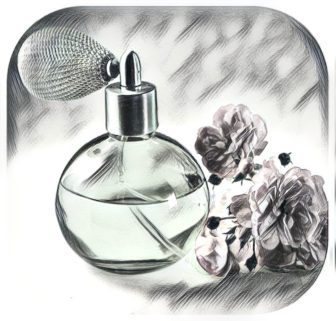
As you may recall, if scent could take physical form, this family would have traveled through life inside a permanent soft green fog, something between a cartoon stink cloud and a Department of War desert field experiment.  Each member of the household believed cologne was not something one applied, but something one soaked in and marinated.  Not spritz.  Not dab.  Full immersion, and ideally overnight.

I will not miss the unmistakable aroma of Adonis returning from the neighborhood gym, sweat cascading off him in rivulets that perfumed the hallways with a scent best described as “ancient locker unearthed from a peat bog.”  It was bad enough watching him attempt to walk normally.  Around the building and along the sidewalks, we neighbors would see his bare torso and biceps so inflated he could no longer lower his arms straight down.  He moved like a man permanently prepared to carry two large Thanksgiving tom turkeys.

Whenever that throat‑tightening, eye‑watering haze slapped me across the face, I knew exactly what it meant: the Stankles had either departed for work and school or had triumphantly returned.  They lived on the opposite end of the hallway from me, which made the reach of their fumes all the more impressive.  For the stench to drift all the way to my wing, it must have clung to them like a second skin and through all seven layers.  Frankly, I suspect the fumes had their own lease agreement.

And now they are off to their new life, ready to add a fresh bouquet to the Poconos Mountains.  I wish the region and their new neighborhood luck.  They’ll need it.

Ciao!


Loose Trash and Looser Rules.

When I lived at the Sage Pointe Condominiums, the truth was simple: there were no real rules.  The Declaration contained only a handful of vague guidelines, none of which carried penalties, financial or otherwise.  In practice, nothing had any teeth; no bite.

What we did have was the Infractions Team, a small group of older ladies who enforced whatever they personally disliked.  If something offended their sensibilities, it instantly became a “rule,” and the offending neighbor was told to cease and desist.  Their grievances ranged from the trivial to the absurd, such as declaring certain bumper stickers on residents’ cars to be violations simply because the messages clashed with their unholy beliefs.  Those errant residents were then threatened with legal action.

Meanwhile, these same enforcers stored their own holiday decorations, bicycles, and medical equipment in the common-area closets with complete impunity. They walked their dogs off the leash.  They grilled pork chops on their balconies with open flames.  They filled staircases with their potted plants.  No reprimands.  No consequences.  No surprise.  It was the classic Rules for Thee and Not for Me dynamic, and everyone knew it.

One of the few written directives concerned garbage disposal.  For years, printed signs were taped to the garbage-room doors in the underground garage.  They instructed residents to place all trash in securely tied plastic bags and to dispose of furniture and large items privately, never in the dumpsters.

As the buildings filled with more residents (there was an ebb and flow with the population), the dumpsters began overflowing just two days after pickup.  At a homeowners’ association meeting, a member of the Care and Upkeep Team scolded the community for tossing unbagged trash and furniture into the dumpsters.  The remarks were recorded in the official minutes.

A couple of weeks later, I went down to throw out my own securely bagged garbage.  I glanced into the dumpster, and there it was.  A mountain of loose junk: files, hanging folders, workbooks, an American flag, Navy memorabilia, and other unbagged débris.  Because the book titles were visible, it was unmistakably the personal clutter of the very same Care and Upkeep Team member who had lectured everyone else about dumping unbagged garbage!

It was a perfect illustration of the deleterious culture at Sage Pointe: rules for thee and not for me.  Others were expected to follow the posted guidelines.  Certain individuals, however, exempted themselves entirely.

They were special!


Another Whiff that Crossed the Line.

And then there was the unmistakable contribution of The Weede Family, whose fusty skunk aroma drifted through the hallways with the determination of a creature lazily seeking freedom.

I have lived in buildings that had friendly doormen and fresh flowers in the lobby, and truly dedicated cleaning crews that cleaned and deodorized a couple times a week.  When I lived in one of those large mid‑rise buildings, the kind with long hallways, welcoming vestibules, perpetually humming vents, there was a cast of neighbors who could each produce their own documentary, for everyone had such pleasantly interesting lives to tell.

However, when I lived at Sage Pointe Condominiums, there were odors of marijuana, tobacco, and perfume that were thickly layered and ever evolving on every floor and in the lobby.  That condominium association was immensely different than all the rest.  Life there was, indeed, never dull, particularly if you had a sensitive nose or didn’t care how dirty the common areas were.  Speaking of the common areas, the walls were always dirty with oil or Cheetos® dust, the common hall carpets were never cleaned, the lobby walls were a patchwork of rinky dink Spackle® repairs and paint that never matched.  “They” never wanted to repaint the entire walls the proper way.

In today’s essay, I’m introducing you to one of the more fusty aromatic residents, The Weede Family.

They lived on my floor and at the far end.  One would never think that the odors from their wing would reach way down to my wing, but they did.  Whenever I opened my front door or stepped off the elevator, I braced myself.  I never knew what stench or invisible cloud would greet me, or what new olfactory assault would come barreling toward my unsuspecting nose.

The fetid odors were unmistakably marijuana.  Not just one kind, but several, and one would never know from one day to the next what strain they’d be smoking.  The worst was the kind that smelled like dead, rotting skunk.  Sometimes that stench was mixed with cheap perfume, and it was enough to suffocate a maggot.  Truthfully, I was surprised I never smelled it in my own condominium unit, but only out in the hallway.

By the time I learned to recognize their specific bouquet and the shifting medley of strains that was each more pungent than the last, I also learned something else: in a building like ours was, no door was ever fully closed, no hallway ever truly empty.  Scents travelled like rumors as they drifted, settled, and rose again when you least expected it.  The Weede Family managed to turn our peaceful corridor into a living, breathing testament to that truth.  Their skunky, dank fog became part of the building’s strange ecology, and a reminder that even in the most ordinary mid‑rise building, the air itself can tell stories you’d never believe unless you smelled them yourself.


The Mark of Mordechi.

There were always dirty spots on the hallway carpets and in the elevators when I lived at Sage Pointe.  At first glance, they looked like the usual suspects, perhaps greasy take‑out containers leaking through flimsy bags, or perhaps the aftermath of a dog with poor timing.  Whatever their origin, the stains remained year after year after year, since no one on the board of directors ever bothered to call a carpet‑cleaning company to shampoo the carpets.

One weekend, though, someone obviously made an effort.  A sharp smell of Resolve® or Shout® hung in the hallways, proof that some anonymous soul had tried to scrub away the blotches.  Whoever it was deserved a medal for attempting to keep the place somewhat presentable.

Then came the Saturday afternoon when I stood waiting for the elevator to reach my floor.  At last, the doors slid open, and there stood Maddee and her younger brother, Mordechi, dripping from the pool and armed with their usual assortment of floaties and bottles.  Just as the doors parted, I caught Maddee in mid‑swoop, giving her water bottle a final flourish and spraying the elevator carpet.  When I looked down, I saw she had left a large, wet “M” beside the other permanent stains.  She and her brother stepped out quickly, their faces tight with guilt and silence.

I greeted them anyway, asked how they were. “How you doing?” I asked.  Maddee’s cheeks flushed deep crimson, and she stammered and babbled through a jumble of half‑formed words as she tripped over her tongue.  She knew that I knew.

The next morning, more than twelve hours later, I rode the elevator again.  The wet “M” was still there.  If it had been water, it would have evaporated long before.  Whatever she’d squirted (soda? juice? suntan lotion?) had soaked in and stayed put.  It’s still there to this day.

Funny, isn’t it, how the Stankle kids, the offspring of Adonis the preacher man and his aromatic wife, aren’t always the paragons one might expect.  And the kids weren’t toddlers; at the time this happened she was about eleven, he was about nine.  Both were old enough to know better and old enough to choose differently.  After all, their father preached it every Sunday and Wednesday on stage.

In a condominium association like Sage Pointe, the carpets in every building told the truth long before the residents did.  Every stain, every spill, every careless squirt from a child’s bottle became part of the story we all had to live with.

Courtesy, like cleanliness, is a shared responsibility.  It’s one that begins with small choices made when no one is supposed to be watching.  And yet, as those lingering marks remind us, someone always is watching, even if it’s only God.


Not-So-Sweet Tarts, and When No One’s Minding.

A Lesson in Modesty.

In a lot of areas around the country, this weekend marks the opening of public swimming pools, so dig out your floating devices and the skimpiest swimwear you can find.  This story comes from a time when I lived in a condominium with swimming pools, a wading pool, a cedar-lined steam room, and all the inconsiderations you can imagine.

The elevator car came to a stop on the lobby floor.  The doors slid open, and I was ready to step out, until I froze mid-step.  What made me pause were the three young women standing directly in front of me, momentarily blocking my path, dressed in barely-there bikinis and entirely unbothered by their own near‑nakedness in a public hallway.

They were college‑age visitors, laughing and carefree, accompanied by one of the downstairs middle‑aged neighbors who was wrapped in a thick beach robe.  The trio of girls, I found out later, spent the weekend coming and going, and the next day I saw them again, heading down the back stairs toward the pool.  As those sweet tarts walked, their swimsuits shifted and rode up, leaving little to the imagination between the ripples of fat and even less to modesty, by cracky.

There was even a time in the dead heat of summer where it just happened that an older, senior-type crowd was having a get-together under the heat of the blazing sun.  A group of teenage girls in tiny bikinis made their way down the pool’s stairs, smirking and walking slow and seductively right in front and past the men.  The women were at another corner of the pool and appeared not to notice the bru-ha-ha.

Throughout the swimming season, the indoor pool area itself told the rest of the story.  In the corners were mounds of inflatable toys stacked so high they reached halfway up the walls.  Beach balls, float rings, plastic ducks, water pistols, and abandoned gadgets cluttered the water.  More than once, if you wanted to swim, you had to fish out stray and abandoned toys or dive to the bottom to retrieve whatever had been left behind.  Interestingly, the steam room was always left clean and uncluttered.

Yet, it was the renters and short‑term visitors who were the ones who mostly descended upon the pools and hot tub, and that’s where most of the disorder began and remained.  Sure, they enjoyed all of the amenities but had no real stake in the property, so there was little incentive to care for it.  And, truthfully, the same could be said for the owners who hosted these guests or rented out their units.  The result was the same: a shared space treated as disposable simply because it belonged to everyone and therefore, in their minds, to no one.

In the end, what unsettled me was more than the exposed full butt cheeks and almost-to-the-nipples cleavage, or the toys or even the noise, but the casual indifference that trailed behind them all.  A shared space only works when the people passing through it feel some measure of responsibility for what they touch and leave behind.  When they don’t, when visitors treat the place as a weekend playground and owners look the other way, the common areas slowly erode.  And standing there in the elevator doorway, watching another wave of guests drift toward the pool, I realized how quickly a condominium building can lose its hominess when too many people forget or just don’t bother to care for it.


Stench in the Shadows.

In the condominium association where I lived once upon a time, there was a strange occurrence that only a brave resident could resolve.  This is the true story.

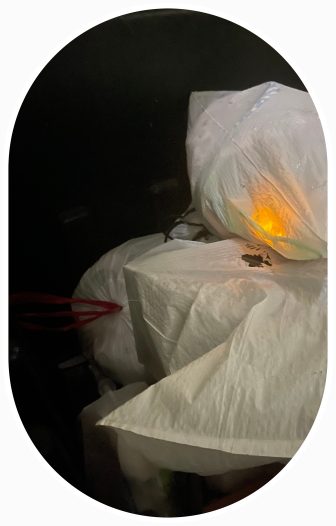
The overstuffed garbage bags appeared twice weekly in the broom closet on the fifth floor of the condominium building.

What brought this to the attention of the residents was the overpowering stench of rotting foods in the bags.

On a Saturday morning, Miss Wanda, the bravest of the fifth-floor residents, had enough of the reek and marched to the broom closet.  Several residents followed her, for they wanted to be in on the revelation.  Wanda opened the door, and there it was: an overstuffed Hefty® bag emitting a stench that would knock a skunk off his beam.

Wanda took one of the bags and opened it up.  Everyone around her jumped back and held their noses.

“It smells like death,” Old Man Fontane gasped.  “Death on a plate of rotted sardines.”

“At least!” gagged Issac Brenner.  “It smells worse than my ex-wife’s armpits after a sweaty walk in the park.  I’d know that stench anywhere.  Barf!”

“Hoo-eee, Lordy!”  Mrs. Chisa Cooke walked away while holding her nose.  “Y’all enjoy.  I’m headed off to watch Julia reruns on my brand new television.”

Bravely, Miss Wanda dug into the garbage bag.  Slimy beet greens, a moldly banana, empty cartons, and paper brochures from the Poconos greeted her.  She dug around until she saw an envelope.  She reached for it with two fingers.

“Ah!  Well.”  She examined the address.  “Ah ha!  It’s from that brood across the hall from me.  I’ll talk to them.”  The neighbors nodded their heads and a few just whispered, “Ooo!” and “Yeah.”

Miss Wanda knocked on the Stankles’ door.  After talking with the grandmama, neighbors could hear the two women laughing before Miss Wanda returned to her condominium.

“So who did it?” Mrs. Chisa Cooke asked the next day in the laundry room.

“Oh, it was her youngest grandbaby, Tristane.  Do you know that ten-year-old is afraid of the dark, so he just tosses the garbage bags in the broom closet and runs back home!  His parents never check to see if the boy is doin’ his errands right.””


Elevator Encounter.

It was Monday evening in March several years ago, Saint Patrick’s Day in fact, when I lived at Sage Pointe and had the weirdest encounter at the elevator.  It was the kind of evening that felt like it had already overstayed its welcome with humidity, the sun nearly set below the horizon, and the atmosphere vaguely resentful overall.  The evening just didn’t feel right.  I had some business to attend to on the first floor of my condominium building.  It wasn’t anything dramatic; just a quick look-see on a neighbor’s wreath on the door.  Once that was done, I turned back toward the elevator, ready to ascend to the relative peace of my penthouse suite.

The elevator dinged open with its usual lack of enthusiasm.  Out stepped the dog walker who was a lean, overworked man with the expression of someone who’d long ago stopped pretending to enjoy his job.  He was wrangling two dogs that week: a jittery black and white shih-tzu dogs, one with a Napoleon syndrome and the other who looked like he’d seen too much in life.  They belong to the renter, “Princess,” we all called her.  Anyway, behind the dog walker emerged a disheveled woman who could only be described as a walking cautionary tale.

She was large, loud, and chaotic in every sense.  Her hair was a brittle, bottle-blonde explosion of stringy straw, unbrushed and defying gravity, as if she’d just lost a fight with the town’s stray cat in an electric storm.  Her clothes hung off her like they’d given up trying to flatter her shape, and her arms were crammed full with an assortment of objects: papers, a purse that had seen better decades, and a large bag that looked like it had been repurposed from a deflated beanbag chair.

Before I could step aside, she lunged forward, thrusting her face into mine with the urgency of someone trying to solve a crime in real time.

“146—Eight?  148?  148?” she barked, her breath a cocktail of tobacco, menthol, and desperation.

I blinked.  I had no idea what she was babbling about.  Was it a code?  A unit number?  A cry for help?

“148?” she repeated right in my face, louder this time, as if volume might unlock my comprehension.

“Umm—” I managed, instinctively leaning back, trying to create space between her and my personal bubble, which she had already detonated.

The dog walker, sensing my confusion and her unraveling, stepped in like a reluctant mediator.

“Here,” he said, gesturing down the hallway and beginning to walk, the two mutts trailing behind him like reluctant furry witnesses.  “I’ll help you get there.”

I didn’t wait for the encore.  I slipped into the elevator, pressed the button for my floor, and let the doors close on whatever that was.  The ride up felt like a small victory.  Quiet, controlled, and blessedly devoid of oddball mystery women and their numerical riddles.


The Quiet Edges.

There was once a resident in a condominium I owned, a man so enigmatic that no one ever quite claimed to know him.  He drifted through the halls like a rumor made flesh, and before long he became the quiet talk of the association.  Here’s the story:

He kept to himself, and barely anyone knew his name.  It was said that Alonzo’s jet black, laid down styled hair shone so bright it might have lit up all of Sage Pointe.  His hair was a shimmering emblem of confidence and unspoken connection.

“Alonzo,” those who knew his name would say, “He got the thickest, the baddest, the most outta-sight edges this side of Sage Pointe.”

“Alonzo?  Ain’t he the one with the black patent leather hair?”

“Shiny and bright, that Alonzo is.”

I know that Alonzo’s secret was SoftSheen Dark and Natural in “Jet Black.”  I’ve seen the box he threw out in the recycling bin.  His “secret” might have looked unnatural as vinyl patent leather shoes, but he had not one grey hair on his head.  It was a one-tone black from the back of his head to the slicked down edges in the front, from sideburn to sideburn.

As time passed, Alonzo’s hair became more than just a spectacle; it turned into a beacon of curiosity and a source of fascination at Sage Pointe.  People were in awe about him at the monthly condominium association meetings – the few times he bothered to show up.  They marveled at him in the church, drooled at him in the grocery store line, admired him at the barbershop, and speculated about his unknown secrets at the local diner.  Yet Alonzo carried on, keeping to himself, his glossy raven hair unfaltering, like a strange moon in its perennial glow.

But one summer evening, at the annual Sage Pointe party, Alonzo broke his silence.  He sauntered onto the wooden dance floor at the activity center with his head held high, dressed sharp as a razor in a cream‑colored linen suit that caught the breeze just so, a narrow burgundy tie tucked neatly against a crisp pale yellow shirt, and red shoes polished to a mirror shine.  The flashing dance lights cast dazzling reflections off both his raven‑black hair and the blinding shine of his shoes.  Eight gold rings gleamed on his fingers — thick, heavy bands with diamonds, emeralds, and garnets that flashed each time his hands cut through the air, catching the lights as surely as his raven‑black hair.  He moved with an easy, unhurried confidence, swaying to the beat of funk music like he had been born for that moment.

Earlier that evening, I watched as he stood off to the side of the party room sampling the appetizers— deviled eggs dusted with paprika, tiny ham biscuits, and those colorful cellophane-tipped toothpicks that skewered a variety of cheese cubes that squeaked when you bit into them.  He washed it all down with two strawberry daiquiris so cold that the condensation rolled down the red plastic Solo® cup like sweat on a July window.  He sipped them slow, savoring each icy, syrup‑sweet mouthful as though it were part of some private ritual that he wanted no one else to be a part of.

I watched him in awe along with the crowd and laughed when Alonzo pulled a small group of kids into his groove.  “It’s all in the soul, you crumb crunchers!  Dance like your hair shines brighter than the stars,” he declared, a wide smile breaking through his elusive façade.  That night, he wasn’t the enigma they had speculated about.  He was the rhythm, the light, the joy.

That is what everyone wanted to believe.

By the time the party was over, it was said that Alonzo’s edges shone so bright it might have lit up all of Sage Pointe.  After the party, although he disappeared into the quiet mystery of his condominium once again, his name would be remembered as the man who brought the condominium association an evening they would never forget.

But in the weeks and months that followed, people began to notice something strange: no one saw Alonzo at church, or in the grocery line, or even passing by the barbershop window.  His apartment blinds stayed drawn, his mailbox appeared untouched.  Some said he’d moved away; others whispered he’d simply slipped into the night the way he’d always lived— quietly, without explanation.  His silver car would be in his parking spot, and sometimes not.  His monthly assessments still were paid in full and on time.  But no one actually saw him.

Now on certain humid evenings, when the streetlights flicker and the cicadas fall silent, a few swear they’ve seen a glint, just a brief flash, like moonlight on patent leather, disappearing around the corner before they can call his name.  And in Sage Pointe, that is enough to keep the legend alive.

In time, the condominium association learned to stop asking where Alonzo had gone.  Life in Sage Pointe moved on, as it always does, yet something in the air felt slightly altered, as though a faint shimmer had been left behind.  The wooden dance floor where he’d once spun the children around seemed to hold a deeper polish, catching the light in ways no one could quite explain.  And every so often, when the dusk settled low and the streetlamps hummed to life, someone would pause mid‑stride, certain they’d caught the scent of pomade or felt the whisper of a beat only Alonzo could hear.  Whether he had slipped away to some quieter corner of the world or simply stepped into the shadows he’d always belonged to, no one could say.  But the memory of that night, and the man whose hair shone like a secret, lingered in Sage Pointe like a story half‑told, waiting forever for the rest of its truth to surface.


Website Built with WordPress.com.

Up ↑