Good Friday.


Exploring what it means to live with character, purpose, humor, and quiet distinction in a secular age — through reflections on culture, manners, and the enduring values that shape a well-formed life without toxicity.
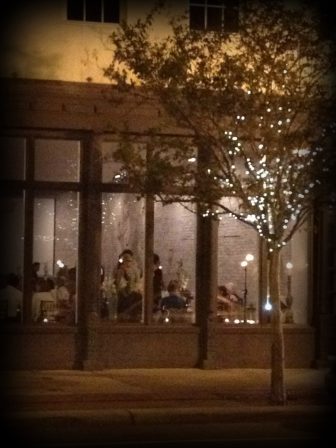
Saturdays bring a delight to our weekends, especially when we change our routine. For something a little different, last Saturday, mid-morning, we headed out to The Kalamata Kafé. We weren’t disappointed.
The simple brunch was nothing short of pleasant; it was one of those simple meals that somehow feels like a small private celebration. Soft violin music emanated from the ceiling speakers. The waitresses were modestly dressed in pure white short togas tied at the waist with gold belts. My companion ordered a knish—a strangely sweetened roll made from a dough similar to pillowy Hawaiian‑style bread. It was filled with soy chorizo and melted queso chihuahua (an imported cheese), a combination that gave it a savory kick and a five-fingered punch beneath the sweetness. I took a small bite and so did my companion; it was unlike anything either of us tried before, unexpected in the best way, and definitely memorable. I ordered an almond croissant sprinkled with sugar and sliced toasted almonds, still warm from the oven, its flaky layers giving way to a soft, fragrant center touched with just enough sugary depth. A cup of weak lemongrass tea sweetened with mesquite honey for the two of us gave the oomph our light brunch needed.
Afterward, we strolled up the bay, the morning light glinting off the water, then we looped back along the main road where the breeze carried the scent of salt and sun-warmed sand. The walk stirred up memories for both of us—those long rides we used to take on the Indian Chieftain, chasing the horizon with nothing but vast open road ahead. Only this time, the adventure came with greater comfort, steadier footing, and a quiet sense of security that felt like its own kind of freedom. We eventually found our car, hopped in, and headed back home. Later that day, the soy chorizo-queso chihuahua knish thing didn’t agree with my companion and we spent the late afternoon paying for it dearly.
We’ll go back to The Kalamata, but with a different menu ordering plan.

A couple of weeks ago, we were in the checkout line at the grocery store, the kind of slow‑moving line that gives you time to observe more than you intended. In front of us stood an elderly woman with a cart full of groceries and a look of growing concern. Something was clearly wrong, though I couldn’t hear the details—because the man behind us had just answered his cell phone and immediately launched into a booming, play‑by‑play commentary of the situation.
He was delighted to narrate. Absolutely delighted. According to him, the woman had “decided not to pay for everything,” and the cashier was now forced to “re‑ring the whole cart,” and on and on he went, blah, blah, blah, embellishing freely, as if auditioning for the role of Town Crier of Checkout Line Four.
Meanwhile, the elderly woman stood quietly at the register, her shoulders slightly hunched, her hands folded around her wallet. She wasn’t dramatic, nor causing a scene. She was simply trying to sort out whatever the problem was.
It wasn’t until later, after we’d checked out and were walking to the car, that my best friend, who had actually heard the real exchange, told me what had happened. The woman’s EBT card hadn’t covered all her items, and she had tried to pay the remainder with a personal check, but the cashier couldn’t accept it for some unknown reason. That was the entire “scandal.” No theatrics. No attempted grocery heist. Just a woman trying to buy food and running into the quiet humiliations that come with limited means.
The man behind us, however, had been proudly broadcasting a story about her of his own invention, complete with moral judgments and imaginary plot twists. He had turned her sad difficulty into laughable entertainment.
I thought about that on my ride home; the ease with which some people narrate other people’s struggles, the confidence with which they fill in the blanks, the laughs, the casual cruelty of assuming the worst when the truth is usually simpler, quieter, and far more human.
A checkout line can reveal more about character than we expect. Sometimes it’s not the person in trouble who tells the story; it’s the person who can’t resist telling the wrong one and laugh at a person’s misfortune.

How much of our lives have we spent trying to be something—or someone—we’re not? It is one thing to pursue growth, to refine our character, and to enrich our inner life, yet it is quite another to adopt a false identity for the sake of impressing others, whether for money, status, or the fleeting approval of strangers, family, and acquaintances.
Lately, it seems that the art of pretending has become a widespread habit, a kind of cultural contagion. Over the past decade especially, I’ve watched this phenomenon snowball. It has become easier and fiendishly tempting to put on a polished façade while abandoning genuineness, humility, and empathy. Social media, with its curated illusions and endless opportunities for self‑promotion and keyboard commandos, has been the chief purveyor of these false faces.
And how easy it is.
In a world moving at swift speed, the pressure to perform seems to be ceaseless. Some people feel compelled to reinvent themselves for every audience, to appear more educated, more virtuous, more high class, more enlightened than they truly are. Some people, unfortunately, strain to become the moral authority in every conversation, to project wisdom they have not earned, and to cloak their insecurity in a thin veil of false humility. Some people invent and re-invent their live story continuously.
It must be exhausting. From my vantage point, watching someone puff himself up by preaching from an imaginary pulpit, presenting himself as all‑knowing while sprinkling in counterfeit modesty, or looking down their nose at others, is a disheartening sight. There is nothing admirable in self‑inflation or pretend self-deflation. It does not elevate a person; it exposes him. False humility serves only the ego. It leaves no room to serve God, despite all their claims of “thanking God everyday” for such-and-such. It comes across Pharisee-like when you know their true history and that they are putting on a public show.
Putting on an act for selfish gain is, at its core, a fabrication of the truth. Duplicity demands constant maintenance, and after a while, there is so much maintenance that fabrication becomes sloppier and sloppier. One must remember every false detail with perfect precision just to keep the fiction intact, and that’s the hard labor one has to do for a hollow reward in the prison of their mind’s fantasy.
It is far better to remember that the one thing you can do better than anyone else is to be yourself. Of course, one could make the argument that being phony for some people is “being themselves. Yet there is less work and stress to admit one’s true self and not make up stories to impress an audience. Or in one case, I have seen one person who has shared his childhood as first “middle class,” then defined it as “not quite middle class,” to the sad Dickensian tale of “being poor.” Is that the “fake it until you make it” mantra at work, or the pretend “rags to riches” story? I won’t bother to hazard a guess. All I can say is I have little regard for counterfeits.
The world does not need more people parroting platitudes or mimicking the latest persona. It needs more of the original, the sincere, the unvarnished. Pretending to be someone else is not only dishonest because it is truly a quiet betrayal of your own dignity.
As we step into another day, we should do so with sober eyes and clear hearts. Remember who you really are beneath the noise and the pressure, and do not compromise that reality. Be honest, be considerate, and be grounded in your principles. Respect yourself and extend that respect to others.

After writing “The Sheriff of Decibels,” regarding the whole “your TV is too loud” saga with the neighbor who heard phantom sound waves, I thought I had earned a brief intermission in the neighborhood drama, but then it reminded me of one of the downstairs neighbors I had once, and those thoughts led to me think of a whole different angle. Life in a condominium is basically a rotating cast of social challenges, and the next act began downstairs.
I lived in a condominium where one of my downstairs neighbors used her balcony like it was her personal broadcasting studio. Whenever she had company, the visitors were always on the sidewalk below. Their conversations rose straight up. I didn’t even have to try to overhear; the dialogue arrived fully formed, projected upward with the confidence of someone who believed the entire building was her audience. If she ever decided to start a podcast, she wouldn’t need equipment. She already had the lungs for it.
Then there’s the patio furniture. Every time she shifted a chair, it sounded like she’s dragged a cast-iron park bench across a stone floor. I’ve heard less noise from actual construction sites.
And of course, there was the cigarette smoke from a cheap brand she probably bought by the truckload. It drifted upward in slow, dramatic spirals, and somehow it slipped into my condo like it had a key. One moment I’m enjoying fresh air; the next, my living room and/or kitchen smelled like a casino buffet circa 1960. It wasn’t ideal, but I learned to adapt since the odor didn’t last more than a half hour or so.
But here’s the important part: I didn’t complain. Not ever. Not a text, not a note, not even a pointed throat-clear over the balcony railing. Why? Because this was life in a building full of people. They talked loudly. They scraped furniture. They smoked. They lived. And unless someone was hosting a demolition derby in their living room, I tolerated the occasional disturbances.
Besides, after the Sheriff of Decibels dealings, I’ve developed a new appreciation for not becoming That Neighbor. If I ever feel tempted to pick up the phone and lodge a complaint, I remember how it feels to be scolded for noises that may or may not exist, and definitely weren’t from me. It’s an excellent deterrent.
So, I let the balcony monologues rise, let the furniture screech across the concrete, let the cigarette smoke drift out and upward like a weather pattern. I breathed, I adjusted, I moved on. Because in the grand, chaotic symphony of condo living, sometimes the most intelligent thing you can do is simply not add your own instrument to the noise.
I just laugh it all off.
Once upon a time, my spouse was the President of our condominium association. He was the designated point‑man for every vendor, handyman, contractor, and the property manager. And without fail, something out there seemed to decide that the exact moment we sit down to eat was the perfect time for someone to call him.
It didn’t matter when we ate:
11:00 AM? Phone rings.
12:15 PM? Phone rings.
4:45 PM? Phone rings.
7:30 AM? Phone rings, because apparently breakfast is also fair game, too.
It was as if people had a sixth sense for when a fork was about to touch a plate.
Even the other board and committee members who should have known better seemed to be compelled to call precisely when we were eating, and not all of these calls were emergencies, either.
Appointments were no better. If someone was scheduled to arrive at 9:00 AM, they absolutely, without hesitation, called at 8:15 AM to announce:
“I’m here.”
Not “I’m on my way.” Not “I’ll be there soon.” No. They were already standing outside like a time‑traveling courier from the future.
And as if the mealtime ambushes weren’t enough, his phone also believed in a 24‑hour discipline of interruption. Text messages arrived at 5:55 AM, before the sun, before coffee, before a bagel, and texts continued rolling in as late as 10:30 PM when we were just about to drift off to Sleepyland. Ostensibly, the entire world has silently agreed that he was available at all hours, like a one‑man emergency hotline for condo‑related existential and non-crises. I was convinced the only time his phone doesn’t buzz is when nothing in particular is going on in our home. Oh. It doesn’t ring or buzz when we are at Mass; our phones are turned off completely then.
It got to a point that I was convinced our condo was either:
I’m kidding, and honestly, who knows? But if someone knocked on the door the next time we even thought about lunch . . . I would’ve d just laughed. I continued to laugh it off.
The most important part of this hilarity is that my spouse and the rest of the board at the time were doing an outstanding job getting the formerly poorly self-managed association back on the right track. They were righting the ship . . .

There is a particular sadness in watching people who live in a constant state of anger, and I see this quite a lot in my neighborhood, and especially since 2020. Their anger is not the righteous anger that rises to defend the vulnerable, but the chronic, simmering kind; the kind that becomes a personality, a worldview, a permanent narrowing of the soul. Some of these people turn ugly and violent when they are cordially greeted by neighbors. These are people who treat every encounter as a contest, every disagreement as a threat, every difference as a personal insult. Perhaps they believe they are defending themselves, but in truth they are defending the walls that imprison them.
Anger becomes their only vocabulary. They speak it fluently, instinctively, even proudly, and peppered heavily with vulgar and filthy words. But beneath that lies a deep poverty of spirit. A person who must always be angry and offensive is a person who has forgotten how to be free and kind.
The tragedy is not merely that they harm others—though they do. The deeper tragedy is what they lose within themselves without realizing it.
They trade all of this for the brittle satisfaction of being “right” and boorish, even when that “rightness” isolates them. They probably do not realize that the fortress they build to keep others out is the same fortress that keeps them in.
My sadness for them is not schmaltzy. It is not the soft sadness of pity. It is the sharper sadness that comes from recognizing wasted possibility. These are people who could be expansive, curious, generous, a positive addition to the neighborhood, but instead they choose the cramped rooms of anger and rejection. They choose to live in a world too small for any soul. It is as though they are possessed by demons.
A life fueled by anger cannot lead to peace. A heart closed to others cannot experience love. A mind that rejects difference cannot grow. They may cling to their fury and their narrowness as if these things protect them, but in the end, they protect nothing. They only ensure that the person holding them remains untouched by the very things that make life worth living.
 Susan Marie Molloy