A Hobby for Mister Money Pit.

A Lesson in Compliance and Conservation.

Once upon a time in a land far away from where I am now writing this essay, I lived in an association where all bets were off on rules and logic.  You see, living in a homeowners’ association is supposed to mean order, maintenance, and shared responsibility (to a point).  In my former community, however, it meant living under the shadow of one homeowner’s misguided “help.”  We all called him Mister Money Pit because everything he touched cost the association more money, more repairs, and more headaches than if he had simply kept his hands in his pockets.  Every homeowner’s association has a character or two, but that association had a catastrophe.  He tinkered, he “fixed,” and nearly everything he touched ended up worse than before.  And for as long as anyone could remember, he was allowed to do it all.

Every winter for years, he oversalted the icy spots near the lobby door, which ruined the concrete sidewalk.  He shoveled snow into piles blocking easy access to exterior doors.  He periodically threw the swimming pool chemistry into chaos by overdosing the chemicals.  He twisted the hinges on the lobby door and every pedestrian door causing them to be misaligned, including the locks being nearly impossible to use.  He broke light fixtures, broke the lens of several fluorescent lights, drilled holes where no holes belonged, and left tools scattered around the common areas like landmines.  His tools were everywhere, behind shrubs, in front of his storage room, and hidden in locked mechanical rooms.  He treated the property like his personal workshop, and the results showed it.

He caused electrical shorts by plugging multiple industrial tools into a single outlet.  He shut off water valves without warning, leaving residents without water for hours.  He painted over rust instead of treating it.  He used the wrong screws, the wrong tools, the wrong materials just about every time.  He even tampered with the elevator machinery and fire alarms, because apparently nothing was off‑limits, and it kept him busy.  When confronted about hiring a professional?  Well, his signature line was “We can’t afford it!”  No, we couldn’t afford him.

He was hemorrhaging the community’s money, time, and ultimately, sanity.  His story is proof that a homeowner’s association must enforce boundaries, require professional work, and stop mistaking chaos for volunteerism.  Otherwise, one man’s hobby becomes everyone else’s disaster.  But for some reason, he was perpetually allowed to continue his operation.  Maybe nobody wanted to hurt his feelings.  Who knows?  No one said why.

He even routinely bypassed the board of directors, instead calling the management company directly to summon vendors for pumps, valves, and lights he had no authority to touch, even when he was told not to, and even more often after he had already made the situation worse.

In reality, Mister Money Pit wasn’t a volunteer.  He was a liability disguised as a helper.  His interference cost the community far more than professional maintenance ever would have.  His behavior was a reminder that good intentions don’t excuse bad outcomes, and that a homeowners association must enforce boundaries, compliance, and accountability, or risk letting one person’s hobby become everyone else’s financial burden.

If a community is to thrive, it must protect itself not only from neglect, but from the chaos created by those who refuse to recognize the limits of their own competence.


Number 7G – The Conclusion

One early morning, as Varina Pembroke-Sinclair stepped out of her condominium and into the hallway, an odd odor caught her nose.  She couldn’t quite identify it, for it was the most unusual and jarring odor she ever smelled in the hallway, and that was saying something at Cypress Row!  Sure, Miss Varina had a talent that proved she could pinpoint any of her neighbor’s aromas that emanated from their condominiums, but this stench in the hallway was something else altogether.

Varina shrugged her shoulders, put the key in her lock, secured it, and headed down the hall to the elevator.

The dank funk became a distinctive fusty skunk-like stench as she approached the elevator.  She turned her nose up into the air and gave a deep sniff.  It came from Number 7G, the closest condominium around the corner from the elevator.  The pungent odor clung to the air like an unwelcomed visitor.  The elevator bell chimed twice and the doors slid open.

Varina entered the elevator car.  She thought about 7G.  Not many people really knew the people who lived in 7G, and no one seemed to care enough to try, including Varina.  Yet she couldn’t shake the feeling that there was more to the family than their infamous habits.  Rumors had swirled among the neighbors, whispers of strange visitors at odd hours, packages left at the door that were never retrieved, and the eerie glow of a flickering light that seemed to pulse through the windows late at night.    She shrugged her shoulders, took a deep breath, and rode the elevator down in silence.

As she exited the elevator on the ground floor, Varina welcomed the fresh, cool air with no smells, other than the Lysol used by the cleaning lady the evening before.

As Varina walked the long five blocks to work, she resolved to uncover the truth.  She wasn’t one for gossip, but something about 7G gnawed at her curiosity.  Besides, her curiosity seemed to always take precedent.

Over the next few weeks, the smell from 7G only grew worse.  It wasn’t just the musty, skunk-like odor anymore.  It now had an acrid edge, as if something was rotting.  Varina couldn’t stand it, yet no one else on the floor seemed to smell it.  Her curiosity turned into unease, then fear, as the stench began to invade her own condominium.

One night, unable to sleep, Varina decided to talk face-to-face with the family in 7G.  She steeled herself, grabbed her keys, and knocked on their door.  The sound echoed through the silent hallway, but there was no answer.  She knocked again, harder this time, the smell making her gag.

The door creaked open.

The apartment was dark.  A dim light bulb on a table flickered in the corner, casting weird shadows on the walls.  Varina stepped inside, calling out tentatively.  The air was oppressive, heavy with the sickly odor, and the silence was deafening.

As she moved further into the apartment, her foot caught on something.  She looked down and gasped.  Strewn across the floor were piles of ashes, remnants of burned paper, clothes, and belongings.  The flickering light came from a makeshift altar, surrounded by melted candles and strange symbols etched into the walls.

And then she saw them.

The family sat on chairs in a circle, motionless.  Their eyes were wide open, staring at nothing, their bodies slumped as if drained of life.  Varina’s scream stuck in her throat as she realized they weren’t breathing.  Whatever had happened in 7G was far beyond anything she could comprehend.

She stumbled backward, fleeing the apartment, and called the police.  When they arrived, the family was gone along with every trace of the altar.  The room was empty, except for a lingering smell and the faint hum of an unseen presence.  Varina thought she lost her mind.  So did the police, and they left, laughing hysterically.

For weeks afterward, Varina couldn’t sleep.  The police dismissed her story as nonsense, chalking it up to old-fashioned hysteria.  But she knew better.  Something unnatural had taken root in 7G, and she feared it hadn’t left.

In time, the building returned to its routines, and the neighbors forgot the brief commotion around 7G.  Yet Varina knew the quiet was only a disguise.  Some nights, long after midnight, a thin ribbon of that same fetid odor would snake beneath her door, as if reminding her that what she witnessed had not ended; only shifted.  The door to 7G remained shut, its crooked numbers unchanged, yet she sometimes heard a soft rustling inside, like chairs being moved or someone rising slowly from a long, unnatural sleep.  And though she told no one, Varina felt certain the family had never truly left.  Something had been awakened in that condominium, something patient, something watchful, and it was only a matter of time before it sought her out and her sanity again.

The months passed in a strange, uneasy blur for Varina Pembroke‑Sinclair.  Though she tried to resume her routines with her morning walks, her evening chamomile tea, her habit of identifying neighbors by scent, something in her had shifted, and yet the building would not let her forget.

Then it subtly reemerged, that faint skunk‑rot odor drifting through the vents at dawn, a soft scratching behind her bedroom wall, a flicker of light beneath her door at 3:17 AM.

Varina told herself it was her imagination, or trauma, or even stress.  She told herself anything but the truth, but the truth had a way of insisting on its position.

One evening, as she returned home from work, she found a small envelope taped to her door.  No stamp nor handwriting.  Just a greasy smudge across the front.  She opened the envelope flap.  Inside was a single scrap of paper, torn from a notebook, with a message scrawled in pencil:

“YOU LEFT US.”

Varina’s breath caught, and she dropped the note as if it burned her fingers.  She forced herself to look down the hallway.  It was empty and silent.  She paused and sniffed the air.  The stench was there again, stronger than ever, curling around her like smoke.

She reported the strange note to the building superintendent, who chuckled and suggested teenagers were playing pranks.  But Varina knew better because teenagers didn’t smell like death.  So that night, she slept with the lights on.

The next morning, at 5:30 AM she woke to the sound of the elevator chiming on her floor.  She froze.  No one used the elevator this early.  She peeked out from her door and looked down the hallway.  A mist drifted around, thick and gray, carrying that unmistakable stink.  Varina backed away, heart pounding as the mist curled toward her, tendrils reaching, searching.

Then she saw four silhouettes in the hallway.  It was the family from 7G.  Their eyes glowed like dying embers.  Their mouths hung open, as if mid‑breath, mid‑scream, mid‑ritual.  They did not move nor blink.

Varina stumbled backward, tripping over her own feet back into her condo and slammed the door shut.  Her hands shook as she locked the deadbolt, then the chain.  The air was deathly silent.  Then came a knock on her door, soft, rhythmic, and patient.

Varina pressed her ear to the door.  A whisper seeped through the wood, thin and cold: “We never left.”

She screamed as the smell flooded under the door.

Varina eventually convinced herself to investigate 7G again, but this time with the building superintendent.  When they opened the door to 7G, the apartment was spotless, with fresh paint, new carpeting, and no symbols, ashes, or smells.  The superintendent excused himself to take a call on his cell phone and moved into another room.

A handyman appeared behind Varina and asked, “Oh, you’re the new tenant?”

Varina spun around and blinked.  “New tenant?  Huh?”

He nodded.  “Someone moved in last night.”

Varina’s stomach dropped.  She stepped into the apartment, scanning every corner, but it was empty.  Then she noticed the bedroom door was closed.  “Is someone in there?” she whispered.

The handyman shrugged. “Eh.  Probably the new guy.”

Varina reached for the knob, and the handyman grabbed her wrist hard.

“You shouldn’t open that,” he warned.  His voice had changed to a rougher and lower quality.

Varina looked up.  His eyes were wrong.  They were too dark and too deep.  Then that smell hit her again, that skunk‑rot, thick and suffocating with a hint of mildew.

The handyman leaned in close.  “We’ve been waiting for you,” he growled.  Behind him, the bedroom door creaked open and some thing stepped out.  The lights flickered.

From behind Varina, a voice whispered:  “Welcome home, Varina.  Welcome home, baby.”

Varina froze, every instinct screaming to run, yet her legs rooted to the floor as the shadows thickened around her.  The air pulsed slow and deliberate like the house itself was breathing.  And in that breathing, she understood, with a clarity that hollowed her out, that whatever waited here had not found her by accident.  It had called her back.  Every sin she committed passed before her eyes.

The lights went out, and she didn’t finish her scream before the darkness swallowed it.  Something demonic tore through her body, ripping away everything that made her her, until only an empty shriveled shell remained where her moist, plump, and life-filled body had been.

And in the darkness, the building exhaled, as demons wont.

 

Loose Trash and Looser Rules.

When I lived at the Sage Pointe Condominiums, the truth was simple: there were no real rules.  The Declaration contained only a handful of vague guidelines, none of which carried penalties, financial or otherwise.  In practice, nothing had any teeth; no bite.

What we did have was the Infractions Team, a small group of older ladies who enforced whatever they personally disliked.  If something offended their sensibilities, it instantly became a “rule,” and the offending neighbor was told to cease and desist.  Their grievances ranged from the trivial to the absurd, such as declaring certain bumper stickers on residents’ cars to be violations simply because the messages clashed with their unholy beliefs.  Those errant residents were then threatened with legal action.

Meanwhile, these same enforcers stored their own holiday decorations, bicycles, and medical equipment in the common-area closets with complete impunity. They walked their dogs off the leash.  They grilled pork chops on their balconies with open flames.  They filled staircases with their potted plants.  No reprimands.  No consequences.  No surprise.  It was the classic Rules for Thee and Not for Me dynamic, and everyone knew it.

One of the few written directives concerned garbage disposal.  For years, printed signs were taped to the garbage-room doors in the underground garage.  They instructed residents to place all trash in securely tied plastic bags and to dispose of furniture and large items privately, never in the dumpsters.

As the buildings filled with more residents (there was an ebb and flow with the population), the dumpsters began overflowing just two days after pickup.  At a homeowners’ association meeting, a member of the Care and Upkeep Team scolded the community for tossing unbagged trash and furniture into the dumpsters.  The remarks were recorded in the official minutes.

A couple of weeks later, I went down to throw out my own securely bagged garbage.  I glanced into the dumpster, and there it was.  A mountain of loose junk: files, hanging folders, workbooks, an American flag, Navy memorabilia, and other unbagged débris.  Because the book titles were visible, it was unmistakably the personal clutter of the very same Care and Upkeep Team member who had lectured everyone else about dumping unbagged garbage!

It was a perfect illustration of the deleterious culture at Sage Pointe: rules for thee and not for me.  Others were expected to follow the posted guidelines.  Certain individuals, however, exempted themselves entirely.

They were special!


The Mark of Mordechi.

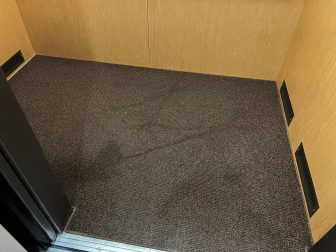
There were always dirty spots on the hallway carpets and in the elevators when I lived at Sage Pointe.  At first glance, they looked like the usual suspects, perhaps greasy take‑out containers leaking through flimsy bags, or perhaps the aftermath of a dog with poor timing.  Whatever their origin, the stains remained year after year after year, since no one on the board of directors ever bothered to call a carpet‑cleaning company to shampoo the carpets.

One weekend, though, someone obviously made an effort.  A sharp smell of Resolve® or Shout® hung in the hallways, proof that some anonymous soul had tried to scrub away the blotches.  Whoever it was deserved a medal for attempting to keep the place somewhat presentable.

Then came the Saturday afternoon when I stood waiting for the elevator to reach my floor.  At last, the doors slid open, and there stood Maddee and her younger brother, Mordechi, dripping from the pool and armed with their usual assortment of floaties and bottles.  Just as the doors parted, I caught Maddee in mid‑swoop, giving her water bottle a final flourish and spraying the elevator carpet.  When I looked down, I saw she had left a large, wet “M” beside the other permanent stains.  She and her brother stepped out quickly, their faces tight with guilt and silence.

I greeted them anyway, asked how they were. “How you doing?” I asked.  Maddee’s cheeks flushed deep crimson, and she stammered and babbled through a jumble of half‑formed words as she tripped over her tongue.  She knew that I knew.

The next morning, more than twelve hours later, I rode the elevator again.  The wet “M” was still there.  If it had been water, it would have evaporated long before.  Whatever she’d squirted (soda? juice? suntan lotion?) had soaked in and stayed put.  It’s still there to this day.

Funny, isn’t it, how the Stankle kids, the offspring of Adonis the preacher man and his aromatic wife, aren’t always the paragons one might expect.  And the kids weren’t toddlers; at the time this happened she was about eleven, he was about nine.  Both were old enough to know better and old enough to choose differently.  After all, their father preached it every Sunday and Wednesday on stage.

In a condominium association like Sage Pointe, the carpets in every building told the truth long before the residents did.  Every stain, every spill, every careless squirt from a child’s bottle became part of the story we all had to live with.

Courtesy, like cleanliness, is a shared responsibility.  It’s one that begins with small choices made when no one is supposed to be watching.  And yet, as those lingering marks remind us, someone always is watching, even if it’s only God.


The Ease of Dishonesty.

A Lesson in Bold Dishonesty and Weakening Trust.

I am continually taken aback by the ease with which people will boldface lie, not just to me, but to anyone who happens to be standing in front of them.  These aren’t always small white lies, but more and more they are bold, unapologetic falsehoods delivered with absolute confidence.  Lying has always existed, of course, but the past five or six years have unleashed a wave of dishonesty that feels different; bolder, more shameless, and normalized.  Of course, dishonesty is nothing new; people have been lying for centuries.  Yet something about the past five or six years feels different, as if a cultural shift has loosened whatever thin thread once held personal integrity together.  The onslaught has been relentless.

I see it everywhere.  The management company personnel for our homeowner’s association lie as if it’s part of their operating manual.  Vendors lie to secure business or cover their incompleteness.  Co-workers lie to dodge accountability.  It’s as if truth has become optional, as if it was a quaint relic from another era.

What unsettles me most is not just the dishonesty itself, but the casualness of it, the speed, the confidence, and the ease of looking right in your eyes as their lies float off their lips.  The way some individuals lie as naturally as breathing, without hesitation or shame.  It makes you question how many conversations you’ve had that were built on foundations that never existed.  It makes you wonder how many times you’ve given someone the benefit of the doubt when they didn’t deserve it.

I’m left grappling with a difficult truth: trust is no longer something that can be assumed.  It must be earned, guarded, and sometimes rebuilt from scratch.  And while I can’t control the behavior of others, I can choose to remain anchored in honesty myself because in a world where lies have become effortless, telling the truth feels almost like an act of rebellion.

In the end, what troubles me greatly isn’t just the lies themselves, but the growing acceptance of them, as if honesty has become an outdated virtue rather than a basic expectation.  I can’t control the behavior of HOA managers, family members, vendors, friends, or coworkers, but I can control the standards I hold for myself.  Choosing truth in a culture that increasingly shrugs at deception feels almost radical, yet it’s the only way to keep my sanity.  If anything, the dishonesty I encounter only strengthens my resolve to remain clear‑eyed, principled, and unwilling to let other people’s falsehoods define the way I move through the world.  But in the long run, I barely trust anyone anymore.


Not-So-Sweet Tarts, and When No One’s Minding.

A Lesson in Modesty.

In a lot of areas around the country, this weekend marks the opening of public swimming pools, so dig out your floating devices and the skimpiest swimwear you can find.  This story comes from a time when I lived in a condominium with swimming pools, a wading pool, a cedar-lined steam room, and all the inconsiderations you can imagine.

The elevator car came to a stop on the lobby floor.  The doors slid open, and I was ready to step out, until I froze mid-step.  What made me pause were the three young women standing directly in front of me, momentarily blocking my path, dressed in barely-there bikinis and entirely unbothered by their own near‑nakedness in a public hallway.

They were college‑age visitors, laughing and carefree, accompanied by one of the downstairs middle‑aged neighbors who was wrapped in a thick beach robe.  The trio of girls, I found out later, spent the weekend coming and going, and the next day I saw them again, heading down the back stairs toward the pool.  As those sweet tarts walked, their swimsuits shifted and rode up, leaving little to the imagination between the ripples of fat and even less to modesty, by cracky.

There was even a time in the dead heat of summer where it just happened that an older, senior-type crowd was having a get-together under the heat of the blazing sun.  A group of teenage girls in tiny bikinis made their way down the pool’s stairs, smirking and walking slow and seductively right in front and past the men.  The women were at another corner of the pool and appeared not to notice the bru-ha-ha.

Throughout the swimming season, the indoor pool area itself told the rest of the story.  In the corners were mounds of inflatable toys stacked so high they reached halfway up the walls.  Beach balls, float rings, plastic ducks, water pistols, and abandoned gadgets cluttered the water.  More than once, if you wanted to swim, you had to fish out stray and abandoned toys or dive to the bottom to retrieve whatever had been left behind.  Interestingly, the steam room was always left clean and uncluttered.

Yet, it was the renters and short‑term visitors who were the ones who mostly descended upon the pools and hot tub, and that’s where most of the disorder began and remained.  Sure, they enjoyed all of the amenities but had no real stake in the property, so there was little incentive to care for it.  And, truthfully, the same could be said for the owners who hosted these guests or rented out their units.  The result was the same: a shared space treated as disposable simply because it belonged to everyone and therefore, in their minds, to no one.

In the end, what unsettled me was more than the exposed full butt cheeks and almost-to-the-nipples cleavage, or the toys or even the noise, but the casual indifference that trailed behind them all.  A shared space only works when the people passing through it feel some measure of responsibility for what they touch and leave behind.  When they don’t, when visitors treat the place as a weekend playground and owners look the other way, the common areas slowly erode.  And standing there in the elevator doorway, watching another wave of guests drift toward the pool, I realized how quickly a condominium building can lose its hominess when too many people forget or just don’t bother to care for it.


Stench in the Shadows.

In the condominium association where I lived once upon a time, there was a strange occurrence that only a brave resident could resolve.  This is the true story.

The overstuffed garbage bags appeared twice weekly in the broom closet on the fifth floor of the condominium building.

What brought this to the attention of the residents was the overpowering stench of rotting foods in the bags.

On a Saturday morning, Miss Wanda, the bravest of the fifth-floor residents, had enough of the reek and marched to the broom closet.  Several residents followed her, for they wanted to be in on the revelation.  Wanda opened the door, and there it was: an overstuffed Hefty® bag emitting a stench that would knock a skunk off his beam.

Wanda took one of the bags and opened it up.  Everyone around her jumped back and held their noses.

“It smells like death,” Old Man Fontane gasped.  “Death on a plate of rotted sardines.”

“At least!” gagged Issac Brenner.  “It smells worse than my ex-wife’s armpits after a sweaty walk in the park.  I’d know that stench anywhere.  Barf!”

“Hoo-eee, Lordy!”  Mrs. Chisa Cooke walked away while holding her nose.  “Y’all enjoy.  I’m headed off to watch Julia reruns on my brand new television.”

Bravely, Miss Wanda dug into the garbage bag.  Slimy beet greens, a moldly banana, empty cartons, and paper brochures from the Poconos greeted her.  She dug around until she saw an envelope.  She reached for it with two fingers.

“Ah!  Well.”  She examined the address.  “Ah ha!  It’s from that brood across the hall from me.  I’ll talk to them.”  The neighbors nodded their heads and a few just whispered, “Ooo!” and “Yeah.”

Miss Wanda knocked on the Stankles’ door.  After talking with the grandmama, neighbors could hear the two women laughing before Miss Wanda returned to her condominium.

“So who did it?” Mrs. Chisa Cooke asked the next day in the laundry room.

“Oh, it was her youngest grandbaby, Tristane.  Do you know that ten-year-old is afraid of the dark, so he just tosses the garbage bags in the broom closet and runs back home!  His parents never check to see if the boy is doin’ his errands right.””


Cutting the Mustard.

A Lesson in Gluttony and Control.

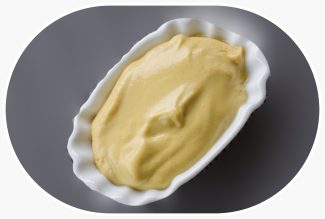
Finally, there is only French’s® yellow and Gulden’s® brown on my pantry shelf.

Once upon a time, that space was also shared – packed, in fact – with small jars holding other variations: champagne, chipotle, curry, honey, jalapeno, siracha, Dijon, . . .

Then, one day, I said aloud, “That’s it!  No more of these yuppified wannabees!”

And Lo!  The clouds parted and the sun came out.  Best Friend assented my exclamation with a “Hear!  Hear!”

We do like mustard.  It was easy to pick up a small jar of something a little different when we stopped by our local winery.  What’s a two-ounce jar of champagne honey mustard?  It didn’t take up much refrigerator shelf space along with the other six or seven two-ounce jars.

Yet, that one day, I had enough.  Those “specialty” mustards began tasting pretty much alike.  There wasn’t anything special about them anymore, except perhaps their unusually shaped jars that really had no further purpose for me after the last bit of mustard was scraped from the sides.

I was throwing money out the proverbial window.  And for what?  To feel like we were indulging in something special or upper class?

Pfffft.  It was a waste.  We said right then and there that those types of mustards won’t darken our doors again.  From then on, it will be a bottle of yellow, a bottle of brown, and a jar of Dijon.  That’s all!  No more yuppy mustard, as we call it.  No more fancy-this and fancy-that.

Along the same lines, in fact, the equivalent goes for fancy horseradish – I have a bottle of siracha horseradish that I bought a few weeks ago from a mom-and-pop grocery store in a neighboring town.  Is it anything special?  No, not really.  It’s really not what I expected; it’s not any hotter or spicier than regular horseradish, and it has a strange, sweet background taste to it.  I could kick myself for not reading the ingredients list better, because this bottle of weirdness has corn syrup in it.  (We’re cutting out corn syrup from our diet).  So, if I want the kick that siracha gives to my bowl of pho or broiled chicken or vegetable stir fry, I can get the siracha bottle from the refrigerator and squeeze a shot or two on my plate.  If I want horseradish, I can make my own fresh or buy a jar of straight horseradish.  I don’t need an odd yuppie horseradish-siracha concoction. Keeping it simple, silly!

So, we’re cutting the mustard.  We’re keeping it unpretentious.  Now on the refrigerator shelf sits a container of yellow, a bottle of brown, and there is a space for Dijon because I need that specifically for making Steak Diane.  Otherwise, any other types of strange mustards will remain on the store and winery shelves, available for other shoppers and connoisseurs to fill up their refrigerators and sate their taste buds with frou-frou table mustards.

It’s minimalism for us now.

Hack, Steal, Swipe, and Other Modern Courtesies.

It’s the Language of Plunder, and it’s all the rage I’m talking about today.

Every so often, my thoughts drift toward the strange new definitions floating around in the modern lexicon.  It’s those little word fads that flare up, spread everywhere, and then vanish the moment a shinier bit of slang arrives.  A word fad, as I see it, is a piece of language used mindlessly, repeated without understanding, and destined for the linguistic landfill as soon as the next trend rolls in.

One of the most abused is hack.  We now have hair hacks, cooking hacks, travel hacks, security hacks, hacks for everything under the sun.   The word is slapped onto any tip, trick, or mildly useful suggestion.  Yet its true definitions include “gaining unauthorized access” and “cutting with heavy blows.”  Neither definition suggests something gentle, clever, or admirable.  Hack!

But instead of offering tips such as hair tips, security tips, cooking tips, we hack, hack, hack.  Take unauthorized access.  Grab and run.  Rip off.  Steal.

Which brings me to another disturbing phrase I hear far too often: “I’m going to steal that idea!”

Usually, it’s said when someone supposedly admires another person’s décor, recipe, style, or skill.  Once upon a time, we might have simply complimented the person.  We might even (brace yourself) have asked permission to borrow the idea.  However, courtesy is apparently passé these days.  Why ask when you can proudly announce your intention to steal from that person?

Why, indeed?  Hands up!  Hand it over!

So now everything is framed as theft: steal, swipe, take, hack.  Even admiration is expressed in The Language of Plunder.

It’s a small thing, perhaps, however, small things shape habits, and habits shape culture.  When our everyday speech defaults to the vocabulary of taking, it’s no wonder the world feels increasingly coarse, transactional, and grabby.

And yet, here we are.  This is the way of things now.

In the end, these little phrases are not harmless quirks of speech; they reveal how casually we treat one another.  When the language of theft becomes the language of admiration, something in our cultural posture shifts away from gratitude, away from courtesy, away from the simple dignity of asking.  Words shape habits, and habits shape the world we build together.  If we want a gentler world, perhaps we begin by speaking as though one is still possible.


Website Built with WordPress.com.

Up ↑