Number 7G – The Conclusion

One early morning, as Varina Pembroke-Sinclair stepped out of her condominium and into the hallway, an odd odor caught her nose.  She couldn’t quite identify it, for it was the most unusual and jarring odor she ever smelled in the hallway, and that was saying something at Cypress Row!  Sure, Miss Varina had a talent that proved she could pinpoint any of her neighbor’s aromas that emanated from their condominiums, but this stench in the hallway was something else altogether.

Varina shrugged her shoulders, put the key in her lock, secured it, and headed down the hall to the elevator.

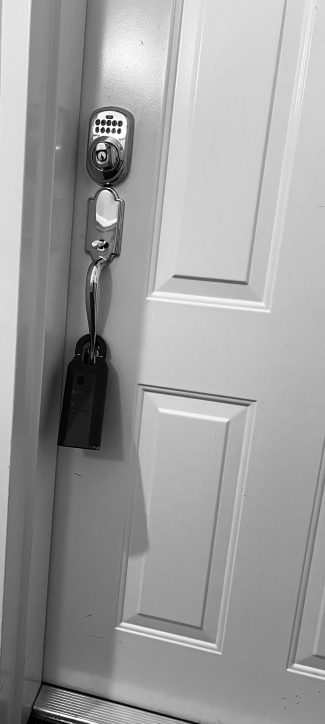
The dank funk became a distinctive fusty skunk-like stench as she approached the elevator.  She turned her nose up into the air and gave a deep sniff.  It came from Number 7G, the closest condominium around the corner from the elevator.  The pungent odor clung to the air like an unwelcomed visitor.  The elevator bell chimed twice and the doors slid open.

Varina entered the elevator car.  She thought about 7G.  Not many people really knew the people who lived in 7G, and no one seemed to care enough to try, including Varina.  Yet she couldn’t shake the feeling that there was more to the family than their infamous habits.  Rumors had swirled among the neighbors, whispers of strange visitors at odd hours, packages left at the door that were never retrieved, and the eerie glow of a flickering light that seemed to pulse through the windows late at night.    She shrugged her shoulders, took a deep breath, and rode the elevator down in silence.

As she exited the elevator on the ground floor, Varina welcomed the fresh, cool air with no smells, other than the Lysol used by the cleaning lady the evening before.

As Varina walked the long five blocks to work, she resolved to uncover the truth.  She wasn’t one for gossip, but something about 7G gnawed at her curiosity.  Besides, her curiosity seemed to always take precedent.

Over the next few weeks, the smell from 7G only grew worse.  It wasn’t just the musty, skunk-like odor anymore.  It now had an acrid edge, as if something was rotting.  Varina couldn’t stand it, yet no one else on the floor seemed to smell it.  Her curiosity turned into unease, then fear, as the stench began to invade her own condominium.

One night, unable to sleep, Varina decided to talk face-to-face with the family in 7G.  She steeled herself, grabbed her keys, and knocked on their door.  The sound echoed through the silent hallway, but there was no answer.  She knocked again, harder this time, the smell making her gag.

The door creaked open.

The apartment was dark.  A dim light bulb on a table flickered in the corner, casting weird shadows on the walls.  Varina stepped inside, calling out tentatively.  The air was oppressive, heavy with the sickly odor, and the silence was deafening.

As she moved further into the apartment, her foot caught on something.  She looked down and gasped.  Strewn across the floor were piles of ashes, remnants of burned paper, clothes, and belongings.  The flickering light came from a makeshift altar, surrounded by melted candles and strange symbols etched into the walls.

And then she saw them.

The family sat on chairs in a circle, motionless.  Their eyes were wide open, staring at nothing, their bodies slumped as if drained of life.  Varina’s scream stuck in her throat as she realized they weren’t breathing.  Whatever had happened in 7G was far beyond anything she could comprehend.

She stumbled backward, fleeing the apartment, and called the police.  When they arrived, the family was gone along with every trace of the altar.  The room was empty, except for a lingering smell and the faint hum of an unseen presence.  Varina thought she lost her mind.  So did the police, and they left, laughing hysterically.

For weeks afterward, Varina couldn’t sleep.  The police dismissed her story as nonsense, chalking it up to old-fashioned hysteria.  But she knew better.  Something unnatural had taken root in 7G, and she feared it hadn’t left.

In time, the building returned to its routines, and the neighbors forgot the brief commotion around 7G.  Yet Varina knew the quiet was only a disguise.  Some nights, long after midnight, a thin ribbon of that same fetid odor would snake beneath her door, as if reminding her that what she witnessed had not ended; only shifted.  The door to 7G remained shut, its crooked numbers unchanged, yet she sometimes heard a soft rustling inside, like chairs being moved or someone rising slowly from a long, unnatural sleep.  And though she told no one, Varina felt certain the family had never truly left.  Something had been awakened in that condominium, something patient, something watchful, and it was only a matter of time before it sought her out and her sanity again.

The months passed in a strange, uneasy blur for Varina Pembroke‑Sinclair.  Though she tried to resume her routines with her morning walks, her evening chamomile tea, her habit of identifying neighbors by scent, something in her had shifted, and yet the building would not let her forget.

Then it subtly reemerged, that faint skunk‑rot odor drifting through the vents at dawn, a soft scratching behind her bedroom wall, a flicker of light beneath her door at 3:17 AM.

Varina told herself it was her imagination, or trauma, or even stress.  She told herself anything but the truth, but the truth had a way of insisting on its position.

One evening, as she returned home from work, she found a small envelope taped to her door.  No stamp nor handwriting.  Just a greasy smudge across the front.  She opened the envelope flap.  Inside was a single scrap of paper, torn from a notebook, with a message scrawled in pencil:

“YOU LEFT US.”

Varina’s breath caught, and she dropped the note as if it burned her fingers.  She forced herself to look down the hallway.  It was empty and silent.  She paused and sniffed the air.  The stench was there again, stronger than ever, curling around her like smoke.

She reported the strange note to the building superintendent, who chuckled and suggested teenagers were playing pranks.  But Varina knew better because teenagers didn’t smell like death.  So that night, she slept with the lights on.

The next morning, at 5:30 AM she woke to the sound of the elevator chiming on her floor.  She froze.  No one used the elevator this early.  She peeked out from her door and looked down the hallway.  A mist drifted around, thick and gray, carrying that unmistakable stink.  Varina backed away, heart pounding as the mist curled toward her, tendrils reaching, searching.

Then she saw four silhouettes in the hallway.  It was the family from 7G.  Their eyes glowed like dying embers.  Their mouths hung open, as if mid‑breath, mid‑scream, mid‑ritual.  They did not move nor blink.

Varina stumbled backward, tripping over her own feet back into her condo and slammed the door shut.  Her hands shook as she locked the deadbolt, then the chain.  The air was deathly silent.  Then came a knock on her door, soft, rhythmic, and patient.

Varina pressed her ear to the door.  A whisper seeped through the wood, thin and cold: “We never left.”

She screamed as the smell flooded under the door.

Varina eventually convinced herself to investigate 7G again, but this time with the building superintendent.  When they opened the door to 7G, the apartment was spotless, with fresh paint, new carpeting, and no symbols, ashes, or smells.  The superintendent excused himself to take a call on his cell phone and moved into another room.

A handyman appeared behind Varina and asked, “Oh, you’re the new tenant?”

Varina spun around and blinked.  “New tenant?  Huh?”

He nodded.  “Someone moved in last night.”

Varina’s stomach dropped.  She stepped into the apartment, scanning every corner, but it was empty.  Then she noticed the bedroom door was closed.  “Is someone in there?” she whispered.

The handyman shrugged. “Eh.  Probably the new guy.”

Varina reached for the knob, and the handyman grabbed her wrist hard.

“You shouldn’t open that,” he warned.  His voice had changed to a rougher and lower quality.

Varina looked up.  His eyes were wrong.  They were too dark and too deep.  Then that smell hit her again, that skunk‑rot, thick and suffocating with a hint of mildew.

The handyman leaned in close.  “We’ve been waiting for you,” he growled.  Behind him, the bedroom door creaked open and some thing stepped out.  The lights flickered.

From behind Varina, a voice whispered:  “Welcome home, Varina.  Welcome home, baby.”

Varina froze, every instinct screaming to run, yet her legs rooted to the floor as the shadows thickened around her.  The air pulsed slow and deliberate like the house itself was breathing.  And in that breathing, she understood, with a clarity that hollowed her out, that whatever waited here had not found her by accident.  It had called her back.  Every sin she committed passed before her eyes.

The lights went out, and she didn’t finish her scream before the darkness swallowed it.  Something demonic tore through her body, ripping away everything that made her her, until only an empty shriveled shell remained where her moist, plump, and life-filled body had been.

And in the darkness, the building exhaled, as demons wont.
 

Stench in the Shadows.

In the condominium association where I lived once upon a time, there was a strange occurrence that only a brave resident could resolve.  This is the true story.

The overstuffed garbage bags appeared twice weekly in the broom closet on the fifth floor of the condominium building.

What brought this to the attention of the residents was the overpowering stench of rotting foods in the bags.

On a Saturday morning, Miss Wanda, the bravest of the fifth-floor residents, had enough of the reek and marched to the broom closet.  Several residents followed her, for they wanted to be in on the revelation.  Wanda opened the door, and there it was: an overstuffed Hefty® bag emitting a stench that would knock a skunk off his beam.

Wanda took one of the bags and opened it up.  Everyone around her jumped back and held their noses.

“It smells like death,” Old Man Fontane gasped.  “Death on a plate of rotted sardines.”

“At least!” gagged Issac Brenner.  “It smells worse than my ex-wife’s armpits after a sweaty walk in the park.  I’d know that stench anywhere.  Barf!”

“Hoo-eee, Lordy!”  Mrs. Chisa Cooke walked away while holding her nose.  “Y’all enjoy.  I’m headed off to watch Julia reruns on my brand new television.”

Bravely, Miss Wanda dug into the garbage bag.  Slimy beet greens, a moldly banana, empty cartons, and paper brochures from the Poconos greeted her.  She dug around until she saw an envelope.  She reached for it with two fingers.

“Ah!  Well.”  She examined the address.  “Ah ha!  It’s from that brood across the hall from me.  I’ll talk to them.”  The neighbors nodded their heads and a few just whispered, “Ooo!” and “Yeah.”

Miss Wanda knocked on the Stankles’ door.  After talking with the grandmama, neighbors could hear the two women laughing before Miss Wanda returned to her condominium.

“So who did it?” Mrs. Chisa Cooke asked the next day in the laundry room.

“Oh, it was her youngest grandbaby, Tristane.  Do you know that ten-year-old is afraid of the dark, so he just tosses the garbage bags in the broom closet and runs back home!  His parents never check to see if the boy is doin’ his errands right.””


When the Hallways Talk.

A short story from the past.

For hours, JeVaughn Willard sat in his recliner, frowning at the sporadic thuds and rolling rumbles echoing through the Sage Pointe Condominium building.  He took another puff of his Kools and listened hard.  The sounds came and went with no discernible pattern, bouncing off the walls and rattling his nerves.  He strained his ears, trying to pinpoint the source, but the building’s acoustics made it maddeningly elusive.  He slid out of his recliner and ambled over to the picture window.  He pushed aside the slats of the Venetian blinds and was glad he was not in the howling thunderstorm.  JeVaughn returned to his recliner.

As the clock struck eight, he took a break from reading his latest mystery novel.  His overflowing garbage bin finally gave him a reason to investigate the noise in the hallway.  He grabbed the bag and shuffled out into the dimly lit hallway, trying to keep his ragged brown corduroy slippers from flying off of his feet.  The carpet muffled his footsteps, but the strange racket had grown louder.  Then, as he rounded a corner, the mystery revealed itself.

Two neighborhood kids, the brood of the Reverand and Mrs. Stankle, were tearing up and down the long corridor, kicking a slightly deflated soccer ball between their feet.

Bam!  The ball slammed against a wall, leaving a faint smudge before careening into the air.

Thud!  The ball rebounded off the ceiling, narrowly missing a flickering light sconce as it came down.

JeVaughn Willard sighed, the corners of his mouth twitching with restrained annoyance.  He trudged to the garbage chute and let the bag drop with a hollow clang, watching it disappear into the void.

“Pointless,” he muttered under his breath, sparing one last glance at the kids.  They laughed and shouted, blissfully unaware of their disruptive echoes.

JeVaughn tightened his terry cloth robe and shuffled back to his door.  “No use mentioning it to their parents,” he thought grimly.  “The reverend’s sermons are loud enough.  I don’t need him aiming one at me!”

Cousin Eddie.

I once lived in a neighborhood called Arrowroot Ranch where the residents were so clique‑ish that my household and I barely knew anyone beyond a polite wave, if even that!  People kept to their own circles, and newcomers like us remained on the outside looking in.  So, it came as a surprise one morning when my best friend returned from the mailbox with a story that would become our own neighborhood legend.

My best friend said to me one cool June morning that as he stepped outside to collect the mail, he was greeted by a stranger standing in the driveway next door with an oversized coffee mug in his hand.  He was an unshaven man who wore sandals with knee socks, shorts with an elastic band (or were they swimming trunks?), and a faded red bathrobe left wide open that left nothing to the imagination.  The robe flapped in the breeze just enough to reveal a bare, hairy beer‑belly gut spilling over the waistband of his shorts.  It was, to put it mildly, an unexpected sight before lunch.

We eventually learned that this man was the new owner of the house next door.  We nicknamed him “Cousin Eddie,” partly because he reminded us of the madcap trailer-living cousin in those Hollywood “Vacation” movies and partly because the name suited him in a way we couldn’t quite explain.  It was affectionate nomenclature, in its own odd and funny way.

Cousin Eddie had an ever‑changing cast of characters living with him, and they were most likely renters.  Two of them we came to know by nickname alone: “Turban” and “Lady Godiva.”  Turban earned her name honestly; she used to wear a turban every day while sitting on a lawn chair in the driveway, talking loudly on her cell phone as though the entire neighborhood needed to hear her side of the conversation.  Lady Godiva, on the other hand, was waiting for her new house to be built, and she was seen popping in and out of her car she parked at the curb.  Why we called her Lady Godiva is lost to memory, though it probably had something to do with her long hair and her tendency to dress… scantily.

Cousin Eddie himself was a snowbird.  From October to April, he lived next door, and from May through September he returned to the forested backwoods of northern Wisconsin.  Each year he hauled his Harley in the bed of his pickup truck, making the long trek north like a migrating bird with chrome handlebars.

When he was in residence at Arrowroot Ranch, we always knew it.  Almost every morning, he fired up the Harley and roared off, returning only when the sun was low.  If he wasn’t riding, he was making noise of another kind; running a jigsaw, grinding rust off his patio furniture, or operating some screeching electrical tool that echoed down the street to the next cul-de-sac.  I had heard that inside his house, he kept several mounted animal heads, deer, elk, and who knows what else, along with a full‑sized pool table planted right in the middle of his living room.

Turban and Lady Godiva added their own flavor to the daily soundtrack.  Turban’s phone calls could be heard from three houses away, and Lady Godiva drifted in and out like a character from a half‑remembered dream, always on her way to somewhere else and constantly talking to someone if they were within earshot.

Yet when Cousin Eddie packed up and headed back to Wisconsin each spring, the neighborhood changed.  The tools went silent, the Harley’s rumble faded.  Yet, for a while, everything felt calmer— almost too calm, as if the street itself were holding its breath.  Turban’s driveway monologues continued more loudly into the warm air.  One winter Lady Godiva was gone.  Another renter showed up, this time it was a man, and we never really saw him, except when an ambulance was called one morning and he was laying half covered on the gurney.

Every now and then, just after dusk, we’d catch something odd: the faint smell of gasoline drifting from next door through the clump of cacti, or the distant whine of a jigsaw even though no one was outside.  Once, my best friend swore he saw a bathrobe flutter past the mailbox, though no one was outside in the wild stormy wind that heralded an approaching rare thunderstorm.  We told ourselves it was imagination, the leftover noise from a noisy neighbor.

But sometimes, on those quiet nights at Arrowroot Ranch when the crickets paused and the streetlamps flickered on, it felt as though Cousin Eddie hadn’t really left— that he only stepped sideways into some unseen corner of the neighborhood, waiting for October to roll around so he could wander back into view like he’d never been gone at all, where he’d shuffle back into view with his faded bathrobe flapping open and his sandals slapping the pavement like he’d never left.. Even now, years later, there are evenings when the air shifts strangely, and for a split second the street feels off‑kilter, the purple mountains standing sentry in the background, as if waiting for someone to step back into it.  In those moments, I think that I hear the faint slap of sandals on pavement, coming from nowhere in particular, as though Cousin Eddie is still wandering around, looking for a mailbox that isn’t his anymore.


Sequins at Noon – Cowgirl Betty and Cap’n America.

There are times when you go to the grocery store simply to buy milk and lettuce, and instead you are confronted with something so visually arresting that you abandon all thoughts of produce and stand there wondering about the human condition.  This happened to us last month.

We were rolling our cart down the main aisle, minding our own business, when we both spotted a couple ahead of us, although “spotted” is too mild a word.  They were impossible to miss.

He was a large man wearing an equally large T‑shirt, the entirety of it was an American flag from collar to hem.  A full‑scale, Fourth‑of‑July‑parade, fireworks-at-dusk-kind-of-flag; the kind of shirt that announces itself before the wearer even turns the corner.

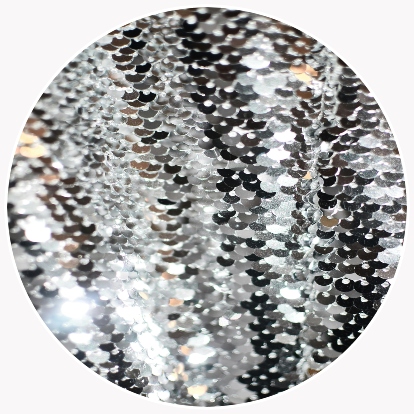
She, by contrast, was petite, but her outfit more than made up the difference.  She wore bright white ankle‑high cowgirl boots, a white mini‑skirt, and a white-and-silver sequined fringed jacket that shimmered like a disco ball on a pilgrimage.  To complete the ensemble, she had a small white cowboy hat perched on her bottle blonde head, as if she were on her way to a rhinestone‑themed rodeo or perhaps starring in a country‑western musical set inside a snow globe.

I might have missed the details if it weren’t for the millions of silver sequins on her jacket, each one catching the store’s fluorescent lights and sending them ricocheting across the checkout lane.  It was less an outfit and more a celestial event.

We kept on walking, passing by them and taking a moment to appreciate the cartoonish artistry.  There is something admirable about people who dress as if the grocery store is their stage and the aisles their runway.

As we continued walking towards the dairy section, I found myself wondering where they were headed next.  A line dancing competition?  A patriotic photo shoot?  A themed anniversary dinner?  Or perhaps this was simply their Tuesday attire, because why shouldn’t one buy canned tomatoes while dressed like a country star and her personal flag-waving display?

The world is full of mysteries, but few shine quite so brightly under fluorescent lighting.  This was fun to have experienced!


Website Built with WordPress.com.

Up ↑