Stench in the Shadows.

In the condominium association where I lived once upon a time, there was a strange occurrence that only a brave resident could resolve.  This is the true story.

The overstuffed garbage bags appeared twice weekly in the broom closet on the fifth floor of the condominium building.

What brought this to the attention of the residents was the overpowering stench of rotting foods in the bags.

On a Saturday morning, Miss Wanda, the bravest of the fifth-floor residents, had enough of the reek and marched to the broom closet.  Several residents followed her, for they wanted to be in on the revelation.  Wanda opened the door, and there it was: an overstuffed Hefty® bag emitting a stench that would knock a skunk off his beam.

Wanda took one of the bags and opened it up.  Everyone around her jumped back and held their noses.

“It smells like death,” Old Man Fontane gasped.  “Death on a plate of rotted sardines.”

“At least!” gagged Issac Brenner.  “It smells worse than my ex-wife’s armpits after a sweaty walk in the park.  I’d know that stench anywhere.  Barf!”

“Hoo-eee, Lordy!”  Mrs. Chisa Cooke walked away while holding her nose.  “Y’all enjoy.  I’m headed off to watch Julia reruns on my brand new television.”

Bravely, Miss Wanda dug into the garbage bag.  Slimy beet greens, a moldly banana, empty cartons, and paper brochures from the Poconos greeted her.  She dug around until she saw an envelope.  She reached for it with two fingers.

“Ah!  Well.”  She examined the address.  “Ah ha!  It’s from that brood across the hall from me.  I’ll talk to them.”  The neighbors nodded their heads and a few just whispered, “Ooo!” and “Yeah.”

Miss Wanda knocked on the Stankles’ door.  After talking with the grandmama, neighbors could hear the two women laughing before Miss Wanda returned to her condominium.

“So who did it?” Mrs. Chisa Cooke asked the next day in the laundry room.

“Oh, it was her youngest grandbaby, Tristane.  Do you know that ten-year-old is afraid of the dark, so he just tosses the garbage bags in the broom closet and runs back home!  His parents never check to see if the boy is doin’ his errands right.””


Elevator Encounter.

It was Monday evening in March several years ago, Saint Patrick’s Day in fact, when I lived at Sage Pointe and had the weirdest encounter at the elevator.  It was the kind of evening that felt like it had already overstayed its welcome with humidity, the sun nearly set below the horizon, and the atmosphere vaguely resentful overall.  The evening just didn’t feel right.  I had some business to attend to on the first floor of my condominium building.  It wasn’t anything dramatic; just a quick look-see on a neighbor’s wreath on the door.  Once that was done, I turned back toward the elevator, ready to ascend to the relative peace of my penthouse suite.

The elevator dinged open with its usual lack of enthusiasm.  Out stepped the dog walker who was a lean, overworked man with the expression of someone who’d long ago stopped pretending to enjoy his job.  He was wrangling two dogs that week: a jittery black and white shih-tzu dogs, one with a Napoleon syndrome and the other who looked like he’d seen too much in life.  They belong to the renter, “Princess,” we all called her.  Anyway, behind the dog walker emerged a disheveled woman who could only be described as a walking cautionary tale.

She was large, loud, and chaotic in every sense.  Her hair was a brittle, bottle-blonde explosion of stringy straw, unbrushed and defying gravity, as if she’d just lost a fight with the town’s stray cat in an electric storm.  Her clothes hung off her like they’d given up trying to flatter her shape, and her arms were crammed full with an assortment of objects: papers, a purse that had seen better decades, and a large bag that looked like it had been repurposed from a deflated beanbag chair.

Before I could step aside, she lunged forward, thrusting her face into mine with the urgency of someone trying to solve a crime in real time.

“146—Eight?  148?  148?” she barked, her breath a cocktail of tobacco, menthol, and desperation.

I blinked.  I had no idea what she was babbling about.  Was it a code?  A unit number?  A cry for help?

“148?” she repeated right in my face, louder this time, as if volume might unlock my comprehension.

“Umm—” I managed, instinctively leaning back, trying to create space between her and my personal bubble, which she had already detonated.

The dog walker, sensing my confusion and her unraveling, stepped in like a reluctant mediator.

“Here,” he said, gesturing down the hallway and beginning to walk, the two mutts trailing behind him like reluctant furry witnesses.  “I’ll help you get there.”

I didn’t wait for the encore.  I slipped into the elevator, pressed the button for my floor, and let the doors close on whatever that was.  The ride up felt like a small victory.  Quiet, controlled, and blessedly devoid of oddball mystery women and their numerical riddles.


Cutting the Mustard.

A Lesson in Gluttony and Control.

Finally, there is only French’s® yellow and Gulden’s® brown on my pantry shelf.

Once upon a time, that space was also shared – packed, in fact – with small jars holding other variations: champagne, chipotle, curry, honey, jalapeno, siracha, Dijon, . . .

Then, one day, I said aloud, “That’s it!  No more of these yuppified wannabees!”

And Lo!  The clouds parted and the sun came out.  Best Friend assented my exclamation with a “Hear!  Hear!”

We do like mustard.  It was easy to pick up a small jar of something a little different when we stopped by our local winery.  What’s a two-ounce jar of champagne honey mustard?  It didn’t take up much refrigerator shelf space along with the other six or seven two-ounce jars.

Yet, that one day, I had enough.  Those “specialty” mustards began tasting pretty much alike.  There wasn’t anything special about them anymore, except perhaps their unusually shaped jars that really had no further purpose for me after the last bit of mustard was scraped from the sides.

I was throwing money out the proverbial window.  And for what?  To feel like we were indulging in something special or upper class?

Pfffft.  It was a waste.  We said right then and there that those types of mustards won’t darken our doors again.  From then on, it will be a bottle of yellow, a bottle of brown, and a jar of Dijon.  That’s all!  No more yuppy mustard, as we call it.  No more fancy-this and fancy-that.

Along the same lines, in fact, the equivalent goes for fancy horseradish – I have a bottle of siracha horseradish that I bought a few weeks ago from a mom-and-pop grocery store in a neighboring town.  Is it anything special?  No, not really.  It’s really not what I expected; it’s not any hotter or spicier than regular horseradish, and it has a strange, sweet background taste to it.  I could kick myself for not reading the ingredients list better, because this bottle of weirdness has corn syrup in it.  (We’re cutting out corn syrup from our diet).  So, if I want the kick that siracha gives to my bowl of pho or broiled chicken or vegetable stir fry, I can get the siracha bottle from the refrigerator and squeeze a shot or two on my plate.  If I want horseradish, I can make my own fresh or buy a jar of straight horseradish.  I don’t need an odd yuppie horseradish-siracha concoction. Keeping it simple, silly!

So, we’re cutting the mustard.  We’re keeping it unpretentious.  Now on the refrigerator shelf sits a container of yellow, a bottle of brown, and there is a space for Dijon because I need that specifically for making Steak Diane.  Otherwise, any other types of strange mustards will remain on the store and winery shelves, available for other shoppers and connoisseurs to fill up their refrigerators and sate their taste buds with frou-frou table mustards.

It’s minimalism for us now.

Hack, Steal, Swipe, and Other Modern Courtesies.

It’s the Language of Plunder, and it’s all the rage I’m talking about today.

Every so often, my thoughts drift toward the strange new definitions floating around in the modern lexicon.  It’s those little word fads that flare up, spread everywhere, and then vanish the moment a shinier bit of slang arrives.  A word fad, as I see it, is a piece of language used mindlessly, repeated without understanding, and destined for the linguistic landfill as soon as the next trend rolls in.

One of the most abused is hack.  We now have hair hacks, cooking hacks, travel hacks, security hacks, hacks for everything under the sun.   The word is slapped onto any tip, trick, or mildly useful suggestion.  Yet its true definitions include “gaining unauthorized access” and “cutting with heavy blows.”  Neither definition suggests something gentle, clever, or admirable.  Hack!

But instead of offering tips such as hair tips, security tips, cooking tips, we hack, hack, hack.  Take unauthorized access.  Grab and run.  Rip off.  Steal.

Which brings me to another disturbing phrase I hear far too often: “I’m going to steal that idea!”

Usually, it’s said when someone supposedly admires another person’s décor, recipe, style, or skill.  Once upon a time, we might have simply complimented the person.  We might even (brace yourself) have asked permission to borrow the idea.  However, courtesy is apparently passé these days.  Why ask when you can proudly announce your intention to steal from that person?

Why, indeed?  Hands up!  Hand it over!

So now everything is framed as theft: steal, swipe, take, hack.  Even admiration is expressed in The Language of Plunder.

It’s a small thing, perhaps, however, small things shape habits, and habits shape culture.  When our everyday speech defaults to the vocabulary of taking, it’s no wonder the world feels increasingly coarse, transactional, and grabby.

And yet, here we are.  This is the way of things now.

In the end, these little phrases are not harmless quirks of speech; they reveal how casually we treat one another.  When the language of theft becomes the language of admiration, something in our cultural posture shifts away from gratitude, away from courtesy, away from the simple dignity of asking.  Words shape habits, and habits shape the world we build together.  If we want a gentler world, perhaps we begin by speaking as though one is still possible.


The Darkness of the World.

The world is messed up.

If you are paying even the tiniest bit of attention to what’s going on in the world, you might just finally realize that this world is more evil than you would ever imagine, and with vastly complicit help not only from political leaders, but also from the average populace.

I’m sometimes surprised at how jaded I’ve become.  As a young idealist way back in the old days, I had all the optimistic and positive outlooks anyone could have.  That’s saying a lot.  Last year, with a new President in office, I barely delved deep into the current events.  I had it in my mind that he was the same as he was in his first term, so what was there to worry about?  This year began just as pacific for me, until February 28 with the war, and since then, well, you know how nutty everything has become.  Or has it?

My best friend mentioned to me that he noticed that this President wasn’t the same, and maybe so since last fall.  That’s when I took a better look and realized he was on to something.  Yes, he certainly is not the guy we voted for.  We were all duped.

People in general have changed, and vastly so since 2020.  It seems that people have such ease in lying right to your face.  They’re ruder.  They even seem to be lazier.  None of it is good.

The Church isn’t the Church I grew up in.  It’s now the Synodal Church.  The true Roman Catholic Church exists, but one must diligently look for it in other places.  I question the current Pope in the form of Robert Prevost, because what he teaches is, well, all over the place with little consistency for Roman Catholicism.

Nevertheless, I think, the longer a person is on this Earth and seriously pays attention to the idiocy that seems to accelerate by the hour, just about anyone could get pretty jaded.  That’s why I am working towards being in the world, but not OF this world.  It’s sometimes a struggle, because I have it in my head that I need to know what’s going on in the world now, for instance, when the bomb is going to be dropped.  Conversely, isn’t it better to not know, and just be spiritually ready for it exploding at any minute?  Yeah, probably.

The moral disorder in our world is far more profound than the everyday vapid scandals people argue about.  It extends beyond routine political dishonesty and the familiar patterns of institutional failures.  What we are now being confronted with instead are deeper, more sinister forms of corruption; systems of exploitation and abuse that flourish in secrecy and rely on the complacency of the very structures meant to safeguard the vulnerable.  These forces are not isolated or accidental; they are organized, persistent, and woven through the generations from the beginning of time.  Their influence reaches into the institutions that shape public life: government, law, media, entertainment, finance, sports, religious establishments, et al.  This is perhaps why meaningful accountability rarely materializes.  The problem is not that the system has malfunctioned; the problem is that the system, as it currently operates, protects the very darkness it should be exposing.  The world is operating exactly how it’s supposed to, with all the evil engrained in it.

Drain the swamp?  Catchy little slogan, that is.  Instead of draining, the loudest mouths just went ahead and joined the swamp.  Why not?  It’s profitable, and in so many ways, too.

It is naïve to think that the ordinary general public will rise to meet these challenges.  Sure, it’s a nice thought that people will wake up and fight for a successful end to malevolence, but in reality, most people, overwhelmed by the pace of modern life and the cozy comfort of laziness and apathy, have settled into becoming passive observers rather than active participants.  Assuredly, outrage flares briefly online with an angry post typed from behind the keyboard, a click of a shared headline, a momentary surge of indignation, but only to retreat into familiar routines.  But when the moment any public criticism touches celebrities or political figures, the reaction is even more predictable: people defend the evil and/or the evil doer or just shut down and move on to something insipid and vapid, which is usually their comfort zone.  Their attachment to public figures functions as modern idolatry, a sick and macabre loyalty that overrides discernment and sensibility.  Many people will defend entertainers, influencers, government notables, popes and televangelists, and other public personalities despite recurring scandals, unanswered questions, weird speeches from pulpits, and patterns of troubling associations.  For them to confront those realities would require them to acknowledge that their long‑held assumptions were misplaced, that trust was given too freely, and that the narratives shaping their lives were not as benevolent as they believed.  For many, that admission is too costly; therefore, comfort becomes preferable to clarity, and distraction becomes easier than responsibility.

There is also a deeper layer of wrongdoing that most people cannot bear to confront.  Beneath the surface of public life exist networks, institutions, and hidden spaces where exploitation thrives, albeit hidden.  These are not the sensationalized fantasies people dismiss, but the quieter, more pervasive forms of abuse and corruption that flourish when shielded from scrutiny.  The very idea of such concealed systems unsettles people, not only because of the moral horror they imply, but because acknowledging them would require reconsidering the trust they place in the social structure.  This is why so few bother to investigate further.  Once one begins to see the depth of institutional rot and mold, it becomes impossible to return to the comfort of ignorance; yet many people would rather stay in their pretty little cocoons and not be bothered.  Peel me another grape, Daphne.

Is the present moment an actual “awakening?”  That’s hard to say, but even if that is true, it is an uneven one.  Most people struggle to sustain attention in a world engineered for constant distraction.  A new crisis, a new headline, a new spectacle appears, and public focus instantly resets.  The duplicitous news stories change faster than the weather in Chicago.  Faster, faster Pussycat, whip up the chaos!  Whip it up good!   Chaos and confusion, to and fro.

Outrage becomes episodic rather than transformative.  The average citizen does not demand accountability, structural reform, or transparency; instead, they drift back into the familiar rhythms of daily life.  They continue to support the very systems they criticize, through consumption, through compliance, through lazy habits.  In this sense, the problem is not merely institutional corruption but a culture that has grown accustomed to passivity, comfort, and distraction, even in the face of profound moral failure.

The individuals who perpetuate profound harm are not merely “troubled;” they embody a level of moral corruption that defies explanation.  Their actions reveal a conscience that has been systematically eroded, a capacity for empathy that appears extinguished.  Yet, they move through public life with practiced ease— smiling for cameras, delivering speeches, presenting themselves as benefactors, all the while concealing the ethical void that enables their behavior.  This dissonance between public image and private reality is precisely what allows such corruption to persist.

Yet these systems endure not only because of those who exploit them, but because of the collective willingness to look away.  As long as society continues to fund, celebrate, and unquestioningly trust the institutions and figures who benefit from the status quo, little to nothing will ever change.  Evil does not thrive simply because it is powerful; it thrives because good people convince themselves it is safer not to see it.  It’s so easy to play the poor put upon ostrich and bury one’s head in the sand.  The refusal to confront uncomfortable truths becomes, in effect, a form of approval and permission.

Cognitive dissonance is real, but far more often, it’s more of the slow erosion caused by apathy, constant confusion, and the relentless flood of information, outrage, and accusation.  When every voice demands attention and every headline contradicts the last, people slip into a kind of mental fog — not because they’re incapable of thinking, but because they’re exhausted by the effort and they would rather take the easy way.  And in that dazed state, many retreat to what feels familiar.  They worship their idols.  They cling to the idols that reflect their preferred illusions, the figures who reinforce their false beliefs and offer the comfort of never having to question anything at all.

The world is very messed up.
 

Money and the Shape of Life.

Lately I’ve been returning to and thinking about topics I hadn’t examined in a while, and one of them is money, how it shaped my choices, how it ordered my days, and how quietly it became a measure of my worth without my ever intending it.

There was a long stretch when money and job position sat at the center of my work life.  I was always looking toward the next promotion, the next pay step increase, the bonus, the next annual bump in my grade level, the next cost‑of‑living increase.  Each milestone felt like progress, like proof that I was moving forward and being successful (whatever that was).  And overtime?  I never turned it down.  It was money in my pocket, yes, but it was also work experience to add another line on the résumé, another rung on the ladder of upward mobility in middle management.

And then came the question of retirement.  The more I earned and the higher I climbed, the more secure my future seemed.  I’ve always belonged to the “Waste Not, Want Not” tribe, careful, frugal, planning.  I was planning my retirement since my first full-time job after graduating from school.  It felt responsible to think about the long game, to build a cushion, to prepare for the day when work would no longer be on my daily schedule.

By most measures, I did well in the career jungle.  I worked hard, advanced steadily, and positioned myself for a sensible retirement.  But to what end, really?  Some of what I gained came at the cost of things I didn’t even realize I was losing.  I missed moments that could have enriched my life in ways no paycheck ever could.  My eyes were fixed on the horizon with an early retirement, a new chapter, a better future, while the present quietly slipped by.

Money is necessary, of course, since it keeps the lights on and the pantry stocked.  But it was never meant to be the focus; it sort of turned out that way without me paying close attention.  You see, when it becomes the center, even subtly, it distorts the way we see our days and the way we measure our worth.  Looking back, I can see how easily the pursuit of “enough” becomes the pursuit of “more, more, more!” and how quietly that pursuit can crowd out the very things that make a life well lived.

Would a very fat bank account make my life easier?  I’m sure it would, but to what extent?  Yet in the reality of life, I have just what I need to live.  Much more, and it would be living an unnecessarily extravagant and artificial life.

In the end, money can support a life and our Earthly needs, but it cannot give one satisfactory meaning.  What endures is the virtue we cultivate, the charity we extend, the relationships we tend, and the gratitude we carry for the gifts already placed in our hands.  When we let money take up more space than it deserves, the spiritual cost is subtle but real: our attention drifts, our desires narrow, and our hearts grow less free.  But when we return to gratitude and right order, we remember that a well‑lived life is measured not by how much money we have in the bank, but by what we become.

When we allow money to become our quiet master, the emotional cost is real: our hearts grow divided, we become conceited, our freedom narrows, and we begin to measure ourselves by standards that have nothing to do with building positive relationships or redemption.  Yet when we push away secularism and return to true gratitude, humility, and order, we remember that a life well lived is judged not by earnings or advancement, but by a fidelity to what matters for all of eternity.


The Age of Adonis (Part 3).

Part 3 of 3:  The Middle Distance.

There is a peculiar vantage point one gains simply by living in close proximity to other human beings.  Not close enough to know their secrets, but close enough to witness their habits; their triumphs, their peculiarities, their kindness, their small vanities, their authenticity, and quieter graces.  It is the view from the middle distance, where comedy and clarity often arrive hand‑in‑hand.

From this vantage point, I have watched our neighborhood Adonis swell into his mythic proportions, strutting through the hallways and on the neighborhood sidewalks like a man auditioning for a protein‑powder commercial.  His life is lived in bold, glossy strokes of sweat, swagger, and spectacle.  He found the easy way in life to make a dollar, becoming a grifter front and center on the unholy stage of a community fellowship group, sermonizing under the guise of praises and blessings peppered within his readings of scripture verses found in a distorted Bible.  He is the sort of person who seems to believe that if he flexes hard enough – whether it is flexing by quoting scripture or flexing muscles – the world will mistake it for virtue.  At the same time, he soaks in the adulation and attention as one would with water from the River Jordan.

And then, from the same vantage point, I have watched the quiet ones; the door‑holders, the plant‑waterers, the hallway‑softeners moving through the building with a gentleness that neither asks nor demands anything in return.  Their lives are lived in gentle lowercase letters, steady and unadorned.  They are not trying to be noticed, which is precisely why they are.

Modern life, for all its noise, has a way of revealing character in the smallest of moments.  The man who performs goodness loudly often performs it only for the applause and attention.  The man who waters the begonias when no one is looking is not performing at all.  He is simply and unobtrusively being who he is.

Discernment, I’ve learned, is not about judging people harshly.  It’s about seeing clearly and recognizing the difference between shine and substance, between the man who builds his body like an Old Testament golden monument and the neighbor who quietly builds a life of decency.  Humility, too, is not a grand gesture.  It is the quiet refusal to make oneself the center of every hallway and fellowship stage.  To learn what not to become is one of the great lessons of life.

And what about the comedy of modernity?  It’s everywhere.  It’s in the man who cannot lower his arms because his torso has become a personal billboard.  It’s in the fluorescent lights catching a thousand sequins on Cowgirl Betty’s jacket in the middle of a sunny day.  It’s in the way we all, at one point or another, take ourselves far too seriously.

But the deeper comedy is the one that makes you smile long after the moment has passed.  It is this: the people who most want to be admired rarely are, and the people who never think about admiration often end up holding the whole place together.

In the middle distance, the truth becomes clear.  Strength is not measured in inches of bicep or the girth of one’s chest.  Beauty is not measured in lumens of sparkle.  Virtue, the real kind, is almost always quiet enough to miss if you’re not paying attention.

But once you see it, you start noticing it everywhere.

This is the final chapter of three parts.

The Age of Adonis (Part 2)

Part 2 of 3:  The Quiet Virtues

Not long after watching the rise of our neighborhood Adonis — the sweat, the swagger, the ever‑expanding circumference of his upper body — I began noticing something else in the building.  Something smaller, quieter, and far easier to overlook.

It started with the older gentleman on the fifth floor, the one who always carries a canvas tote bag and walks with a slight shuffle.  I once saw him pause in the lobby to hold the door for a mother wrangling a stroller and two grocery bags.  He didn’t say much. He just nodded, smiled, and waited until she was safely inside.  No flexing.  No performance.  Just a simple act of courtesy that didn’t require an audience.

Then there’s the woman down the hall who leaves small seasonal decorations on her door.  They aren’t elaborate, just a tiny flowery wreath or a quilted, hanging pumpkin door decoration.  She never announces them, never tries to impress anyone.  But somehow those little touches soften the whole hallway, as if she’s quietly reminding the rest of us that beauty doesn’t have to shout.

And of course, there’s the retired engineer who waters the courtyard plants when no one else remembers.  He doesn’t make speeches about community or stewardship.  He simply notices what needs doing and does it, his hands moving with the calm competence of someone who has spent a lifetime tending to things that grow slowly.

None of these people would ever call themselves virtuous.  They would laugh at the idea.  They are simply living their lives with a kind of unselfconscious decency that doesn’t demand or look for applause.

It struck me one afternoon, watching the engineer mist the begonias while Adonis strutted past, that quiet virtues are the ones that actually hold a place together.  Not the loud displays of strength or the curated personas, but the small, steady acts that ask for nothing in return.

The world has always had its Adonises; men who sculpt themselves into monuments and then wonder why no one bows.  But the world has also always had its quiet souls, the ones who keep the doors open, the plants alive, the hallways gentle.

And if I’m honest, it’s the quiet ones who make a neighborhood livable.  They are the ballast, the steadying weight, the reminder that goodness doesn’t need to be dramatic nor a showboat to be real.

In a culture obsessed with spectacle, the quiet virtues are almost radical these days.  They whisper instead of shout.  They build instead of pose.  They endure long after the muscles deflate and the spotlight moves on.

And perhaps that is the real miracle: that in a world full of noise, the softest lives are often the ones that speak the truth most clearly.

Part 3 will be published on April 18, 2026.

Sequins at Noon – Cowgirl Betty and Cap’n America.

There are times when you go to the grocery store simply to buy milk and lettuce, and instead you are confronted with something so visually arresting that you abandon all thoughts of produce and stand there wondering about the human condition.  This happened to us last month.

We were rolling our cart down the main aisle, minding our own business, when we both spotted a couple ahead of us, although “spotted” is too mild a word.  They were impossible to miss.

He was a large man wearing an equally large T‑shirt, the entirety of it was an American flag from collar to hem.  A full‑scale, Fourth‑of‑July‑parade, fireworks-at-dusk-kind-of-flag; the kind of shirt that announces itself before the wearer even turns the corner.

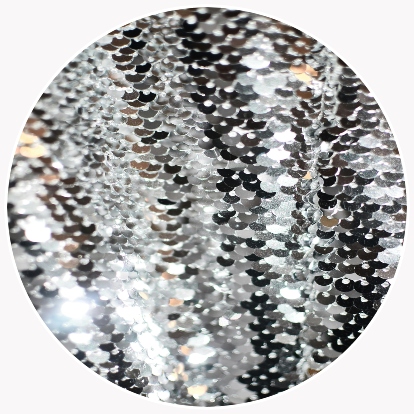
She, by contrast, was petite, but her outfit more than made up the difference.  She wore bright white ankle‑high cowgirl boots, a white mini‑skirt, and a white-and-silver sequined fringed jacket that shimmered like a disco ball on a pilgrimage.  To complete the ensemble, she had a small white cowboy hat perched on her bottle blonde head, as if she were on her way to a rhinestone‑themed rodeo or perhaps starring in a country‑western musical set inside a snow globe.

I might have missed the details if it weren’t for the millions of silver sequins on her jacket, each one catching the store’s fluorescent lights and sending them ricocheting across the checkout lane.  It was less an outfit and more a celestial event.

We kept on walking, passing by them and taking a moment to appreciate the cartoonish artistry.  There is something admirable about people who dress as if the grocery store is their stage and the aisles their runway.

As we continued walking towards the dairy section, I found myself wondering where they were headed next.  A line dancing competition?  A patriotic photo shoot?  A themed anniversary dinner?  Or perhaps this was simply their Tuesday attire, because why shouldn’t one buy canned tomatoes while dressed like a country star and her personal flag-waving display?

The world is full of mysteries, but few shine quite so brightly under fluorescent lighting.  This was fun to have experienced!


Website Built with WordPress.com.

Up ↑